

Potato talk: Washington-Oregon Potato Conference highlights one of the Pacific Northwest’s greatest crops
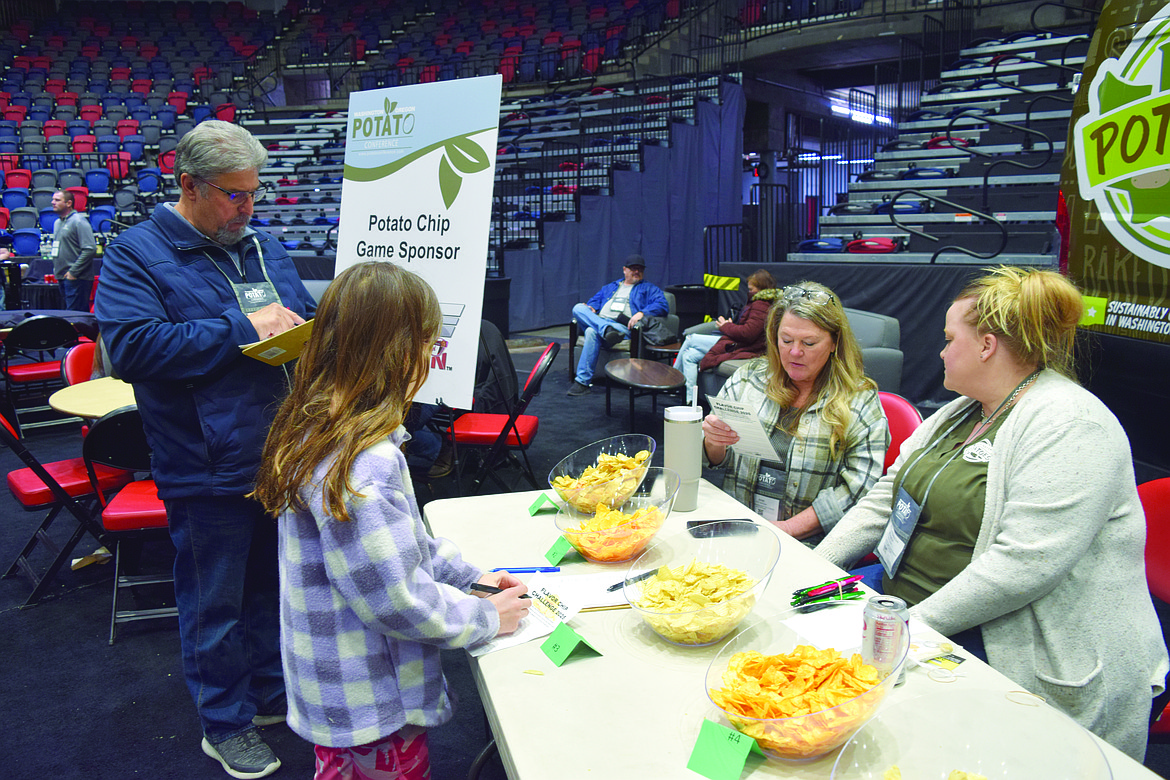
Attendees guess the brand and flavor of potato chips at the Flavor Chip Challenge, part of last year’s Washington-Oregon Potato Conference.
FILE PHOTO
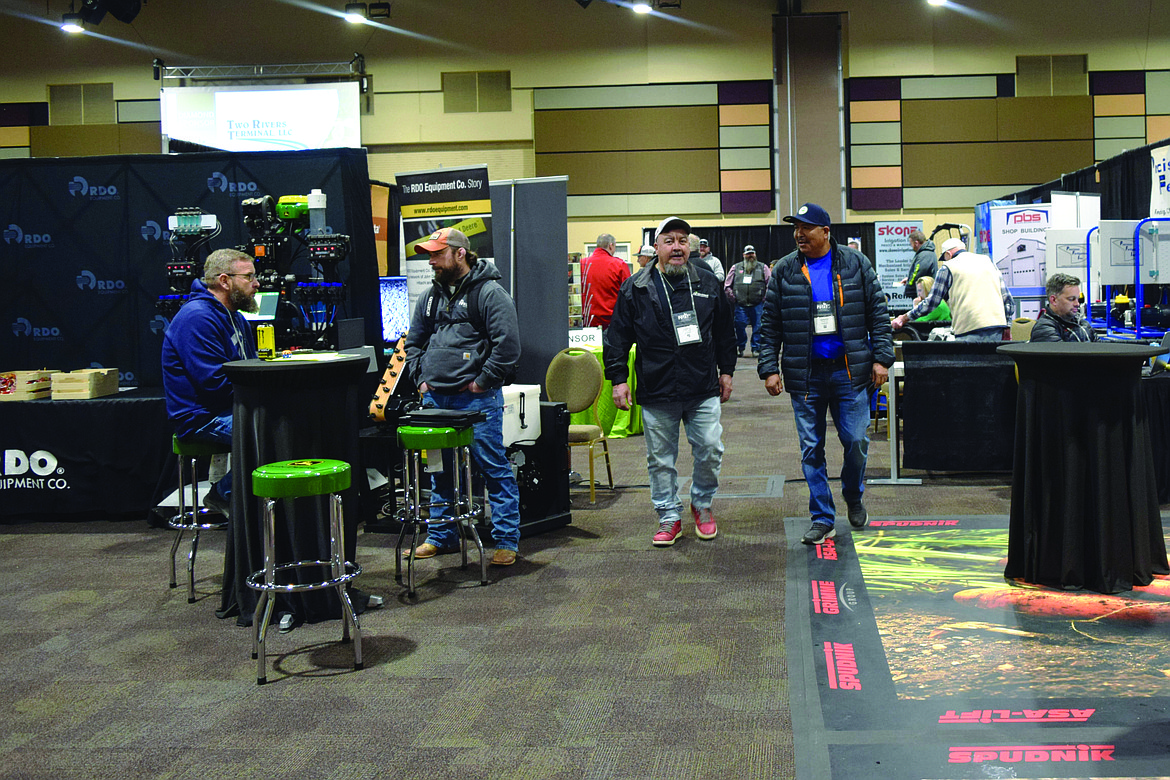
The trade show at this year’s Washington-Oregon Potato Conference features more than 260 exhibitors from all sectors of agriculture.
FILE PHOTO
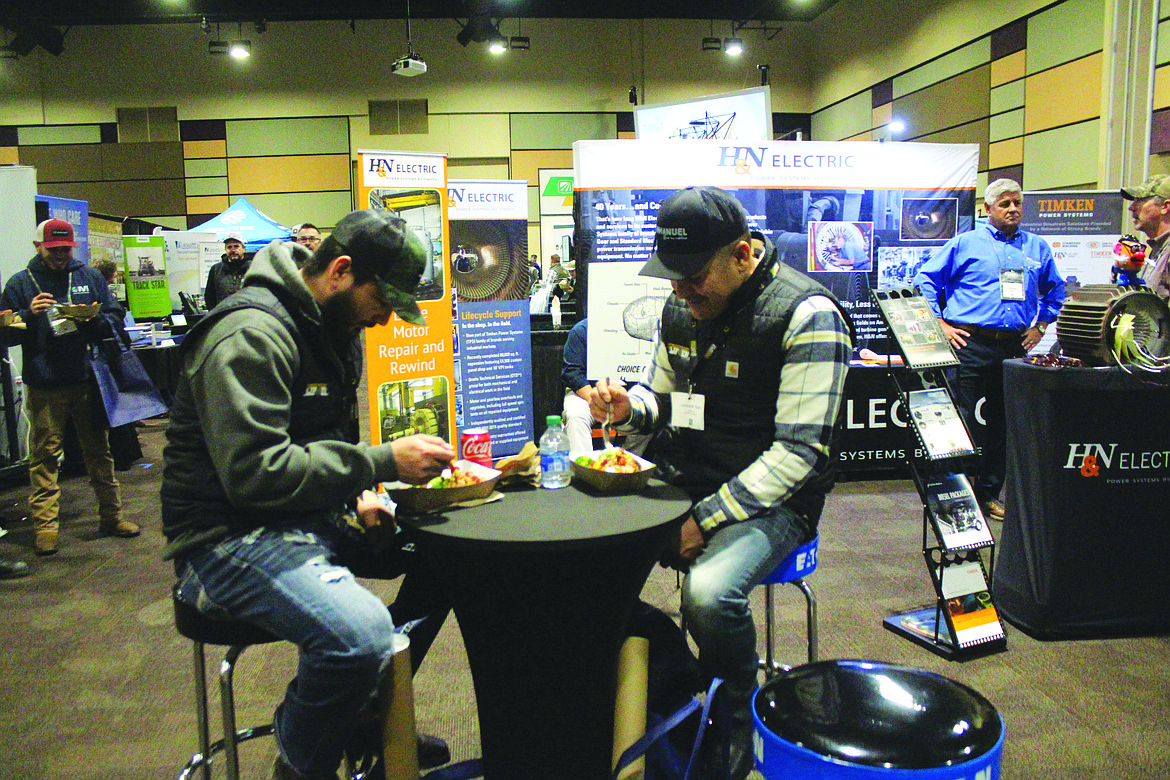
Attendees at the potato conference dig into the baked potatoes served by Washington, Oregon and Idaho potato commissioners.
FILE PHOTO
The Pacific Northwest as a whole is known for agriculture in general with forestry, ranching and farming everywhere, and potatoes is a strong crop throughout the region, according to planners of the Washington-Oregon Potato Conference.
“Idaho is the biggest (potato) production state, but Washington is close behind, and Oregon is a top-ten producing state,” said Kam Quarles, CEO of the National Potato Council and a speaker at the Washington-Oregon Potato Conference set for Jan. 27-29. “(There’s) a huge amount of production in the Pacific Northwest. (It’s) very important to the potato industry.”
Last year about 3,000 people came to the Washington-Oregon Potato Conference to learn about all aspects of potatoes. All three days, there’s a trade show with more than 260 exhibitors showing everything from heavy machinery, to seed, to engineering, to insurance and financial services. There will also be food and drink available at the trade show, said Tressa Radach, office manager of the Washington Potato Commission and the conference’s primary organizer.
On Tuesday, there’s a cultivar workshop with a sneak peak of the latest breeding innovations and sessions on the technical aspects of soil management, irrigation, adjustment to changing climate and pest control. Also on Tuesday, returning for the second time, is the Ag Innovation Session, with representatives from some of the Northwest’s high-tech ag companies. They’ll talk about cutting edge advances in robotics, drone use and fertilizer management.
First aid training will be available at no charge from the Washington State Potato Foundation, with classes in English on Tuesday and Spanish on Wednesday.
The Potato Foundation will sponsor a speaking contest for Future Farmers of America students on Tuesday. This is the second year for the contest, said coordinator and Foundation Board Member George Dress.
“We have 14 kids so far this year and hopefully we’re going to get some more,” Dress told the Basin Business Journal Jan. 8. “We do both extemporaneous public speaking and creed speaking. It’s a great way for kids to get out and test their skills.”
The contest is sort of a practice run for official speaking competitions Future Farmers of America students can participate in later in the year, Dress said. In extemporaneous speaking, students are given a topic – it could be technology, climate change, farm labor laws or almost anything else ag-related – and then have 30 minutes to prepare a four-minute speech, which they then deliver to a panel of judges. Other speakers simply recite the FFA Creed, and the student with the best delivery will repeat the performance at the Agricultural Leadership Banquet Wednesday. There are prizes for the best in both categories, Dress said, although those hadn’t been determined at press time.
“The public also is able to come in and watch as well,” Dress said. “And then those kids are able to go out and actually enter the potato conference itself and walk around and network.”
Tuesday evening will be the PAC Auction, sponsored by the Washington Potato and Onion Association.
Wednesday will begin with a word from regional and national experts on the state of the potato industry. Chris Voigt, executive director of the Washington Potato Commission, and his counterpart Gary Roth of the Oregon Potato Commission, will give updates on the potato business in their states. John Mesko of the Potato Sustainability Alliance, based in Wisconsin, and Blair Richardson of Colorado-based Potatoes USA will also give updates.
At the same session, Quarles will talk about the picture facing growers and shippers in international potato exports.
“Regardless of the commodity you’re producing right now, it’s some tough economic times,” Quarles told the Basin Business Journal. “There’s a lot of effort going on by a number of different organizations, including ours, to get additional economic relief to growers. Some of that is impacted by tariffs … If you’re sourcing fertilizer from foreign markets, crop protection tools from foreign markets, if you’re trying to build new, potato processing and packing facilities, a lot of that equipment comes from foreign markets, (even) the steel that they’re built with. All of that is driving up costs.”
Agricultural labor has been a hurdle as well, Quarles said, with tightening border and immigration control.
There are also recent changes to overtime laws for farmworkers that are putting the pinch on growers.
“It’s painting a very challenging picture at this point in time for producers,” he said.
There are bright spots on the horizon, Quarles said.
“If some of these trade agreements that have been talked about but aren’t quite to the finish line yet can get done, (there) could be huge benefits for the potato industry,” Quarles said. “(There are opportunities) in exporting processed potato products like frozen french fries. But then also if we can get Japan open for fresh potato exports, Washington and Oregon would be a huge beneficiary of that. It’s about $150 million a year in new US ag exports. That would be that would be about a 15% increase globally in our fresh potato exports, just that one country. So, you’re not talking about tiny little moves of the dial. It’s really big.”
For pesticide applicators wanting to maintain their credentials, there are sessions Wednesday in both English and Spanish that allow participants to earn credits good for both Washington and Oregon. There is also a full slate of sessions from experts at Washington State University, Oregon State University and other institutions in breeding and growing potatoes.
There’s some fun planned for Wednesday as well. The Flavor Chip Challenge gives attendees a chance to test their potato palates.
“We have a bunch of different potato chips for them to try, and they guess the flavor and the brand,” Radach said. “There are first-, second- and third-place prizes. It’s a fun competition.”
Following the Flavor Chip Challenge will be the traditional potato bar lunch, served by the potato commissioners from Washington and Oregon.
Thursday concludes the conference, with more expert sessions, mostly focusing on pest control. There is also a Spanish-language program Thursday.
The Pacific Northwest is more than just a high-production region for potatoes and other specialty crops, Quarles said; it’s a bellwether for American agriculture.
“The Pacific Northwest is incredibly important,” Quarles said. “As goes the Northwest, it will on a macro basis impact the climate for the entire U.S. industry.”
Schedule:
Monday, Jan. 26, 2026
1-4 p.m. Booth Move In
5-9 p.m. Early Bird Reception (SpringHill Suites)
Tuesday, Jan. 27, 2026
7 a.m.-5:15 p.m. Registration Opens
8-10 a.m. Booth Move In
8:30 a.m.-12 p.m. English CPR/First Aid Training
10a.m.-12 p.m. Ag Innovation: Cutting-Edge Ag Tech – Moderator: Shashi Yellareddygari, Ph.D.
- 10:10 a.m. Precision, Productivity, and Progress: The Next Generation of Agricultural Innovation – Gabe Sibley and Curtis Garner, Verdant Robotics
- 10:30 a.m. How Real Time Nutrient Management Makes Every Pound of Fertilizer Work Harder for Growers’ Bottom Lines – Mark McConnell, AquaSpy
- 10:50 a.m. Ag Drones Today – Bill Ballantyne, Drone Country
- 11:10 a.m. Measuring Harvest in Real Time – Harry Tinson, Harvest Eye
- 11:30 a.m. Q&A
10 a.m.-5 p.m. Trade Show
1:30-5 p.m.Cultivar Performance Workshop
- 1:30 p.m. Cultivar Display – View the Clones and Cultivars from This Year’s Trials
- 1:40 p.m. Field Performance and Agronomy Updates of New Clones & Cultivars – Mark Pavek, Zach Holden, Rudy Garza, Vito Cantu, WSU Pullman
- 2:00 p.m. 2025 Postharvest Storage & Quality Evaluations – Jake Blauer & Carlos Gonzalez-Tapia, WSU Pullman
- 2:20 p.m. Rainier and Castle Russet – Fresh Pack Observations; Upcoming Specialty and Chipping Clones – Brian Charlton, OSU Klamath Falls
- 2:40 p.m. Oregon Potato Breeding & Variety Development Program Update – Vidyasagar ‘Sagar’ Sathuvalli, OSU Hermiston
- 3:20 p.m. How Do Selections from Columbia Root-Knot Nematode Resistant Breeding Families Stack Up Against Their Siblings? – Max J. Feldman, USDA-ARS, Prosser, Washington
- 3:40 p.m. Aberdeen Breeding Program Update and Planned Variety Releases - Jonathan Whitworth, USDA-ARS, Aberdeen, Idaho
- 4:00 p.m. Analysis of Cultivars and Breeding Lines at Prosser - Roy Navarre, USDA-ARS, Prosser, Washington
- 4:20 p.m. Resistance to Potato Virus Y in Potato Cultivars Carrying R or N Genes: An Update - Alex Karasev, Univ of Idaho - Moscow
- 4:40 p.m. National Fry Processing Trial (NFPT) Updates - Tim Rendall, Potatoes USA – Denver, Colorado
- 5:00 p.m. Adjourn
5-8 p.m. Trade Show Reception & Potato PAC Auction (TRCC)
Wednesday, Jan. 28, 2026
7:30 a.m. Continental Breakfast
7:30 a.m.-4 p.m. Registration Opens
7:55 a.m.-12 p.m. General Sessions – Raina Spence, Moderator
- 7:55 a.m. Welcome
- 8:00 a.m. Potato Sustainability Alliance Updates – John Mesko, Potato Sustainability Alliance
- 8:25 a.m. Federal and International Trade Update for the Potato – Kam Quarles, National Potato Council
- 8:50 a.m. Washington State Potato Commission Update – Chris Voigt, Executive Director, Washington State Potato Commission
- 9:15 a.m. Oregon Potato Commission Update – Gary Roth, Executive Director, Oregon Potato Commission
- 9:55 a.m. Potatoes USA Update – Blair Richardson, Potatoes USA
- 10:20 a.m. Using Soil Aggregates as a Soil Management Fingerprint in Potato Fields – Carlos Bonilla, Oregon State University, Director of HAREC, Hermiston, Oregon
- 10:45 a.m. What Respiration Rates Reveal About Potato Metabolism and Postharvest Quality – Gustavo Teixeira, University of Idaho, Kimberly
- 11:10 a.m. Field Performance Comparison of Mobile Drip vs. Conventional Irrigation in Potato – Jacob Meeuwsen, Washington State University
- 11:35 a.m. Early Springs and Delayed Autumns: Capitalizing on Longer Potato Growing Seasons – Mark Pavek, Zach Holden, Jake Meeuwsen, Jake Blauer, Rudy Garza, Vito Cantu, Washington State University, Pullman
- 12:00 p.m. Adjourn
8:30 a.m.-12 p.m. Spanish CPR/First Aid Training
9 a.m.-5 p.m. Trade Show
10 a.m.-1 p.m. Flavor Chip Challenge
12-1:30 p.m. Hosted Potato Bar
12-1:30 p.m. Hosted Potato Bar, Trade Show, Convention Center
1-4:35 p.m. General Sessions – Ken Frost, Moderator
- 1:00 p.m. Beating the Heat: Potato Stress, Yield, and Quality – What We’ve Learned to Date, Jacob Blauer, Washington State University, Pullman
- 1:25 p.m. Can We Increase Potato Yield and Tolerance to Stress by Optimizing Vitamins’ Use Efficiency? – Aymeric Goyer, Oregon State University, Corvallis
- 1:50 p.m. Dormant (Direct) Tuber Testing: Early Detection of Tuber Necrotic Viruses in Seed Potatoes – Aritra Roy Choudhury, Montana State Seed Certification, Montana State University
- 2:15 p.m. A Systems-Based Strategy for Management of PLRV and its Aphid Vectors in Potato Production – Michelle Heck, UDSA-ARS and Cornell University, Ithica New York
- 2:55 p.m. Insecticides for Aphid Vectored Virus Transmission – Gina Angelella, USDA-ARS Prosser
- 3:20 p.m. Management of Disease Through Seed Potato Production and Certification – Mohamad Chikh-Ali, Colorado State University
- 3:45 p.m. Recent Observations of Potato Diseases and Their Potential Sources – Ken Frost, Oregon State University, Hermiston
- 4:10 p.m. Weed Control in Potatoes: Lessons Learned and a Career Retrospective – Joel Felix, Oregon State University, Malheur Experiment Station
- 4:35 p.m. Adjourn
6-9 p.m. Leadership Recognition Banquet
Thursday, January 29, 2026
7:30 a.m. Continental Breakfast
7:30 a.m.-12 p.m. Registration Opens
7:55 a.m.-12 p.m. General Sessions - Chakradhar Mattupalli, Moderator
- 7:55 a.m. Welcome
- 8:00 a.m. Management of Potato Black Dot, Chakradhar Mattupalli – Washington State University, Mount Vernon
- 8:25 a.m. Powdery Scab: Lessons and Observations from the Field – Brian Charlton, Oregon State University, Klamath Falls
- 8:50 a.m. Powdery Scab Disease Management – Mohamad Chikh-Ali, Colorado State University
- 9:15 a.m. Updates from the Washington Soil Health Initiative – Chris Benedict and Deirdre LaHue, Washington State University Mount Vernon and Whatcom County
- 9:55 a.m. Private Sector Efficiency for the Public Potato Breeding: Insights from Comparison of Domestic and Private European Breeding Programs - Max Feldman, USDA-ARS Prosser
- 10:20 a.m. Heat Stress and Safe Applicator Practices – Doug Hartfield, L&I
- 10:45 a.m. Variable Rate Irrigation of Potatoes – Elisa Flint, Utah State University
- 11:10 a.m. Soil Property Effects on Soilborne Disease and Tuber Yield – Amber Moore, Oregon State University, Corvallis
- 11:35 a.m. All Models are Wrong, but Some are Useful: Simple Models Best Inform Pest Management – Dave Crowder, Washington State University, Pullman
9 a.m.-2 p.m. Trade Show
12-1 p.m. Lunch (TRCC)
1-4:35 p.m. General Sessions – Carrie Wohleb, Moderator
- 1 p.m. Potato Pest Trends and Alerts – Carrie H. Wohleb, Washington State University Extension
- 1:25 p.m. Mitigating Metam - Alternatives to Metam Fumigation for Verticillium Wilt Management – Jeff Miller, Miller Research, Rupert, Idaho
- 1:50 p.m. The Effects of Solanum sisymbriifolium on the Columbia Root-knot Nematode Meloidogyne chitwoodi – Koy Chandler, PhD Candidate, Washington State University
- 2:30 p.m. Up, Down, and All Around: Exploring the Distribution and Movement of Nematodes in Potato Fields – Inga Zasada
- 2:55 p.m. Developing Nematode Resistant Varieties: Are New Genetic and Genomic Tools Improving Our Efficiency? – Vidyasagar (Sagar) Sathuvalli Rajakalyan, Oregon State University, Hermiston
- 3:20 p.m. Identifying Important Natural Enemies for Potato Pests – Bonnie Ohler, WSU Extension/USDA-ARS, Wapato
- 3:45 p.m. What’s New in Controlling Insects and Nematodes in Pacific Northwest Potatoes – Alan Schreiber, Agriculture Development Group, Inc., Eltopia, Washington
- 4:10 p.m. Evaluating Alternatives to Neonicotinoid Insecticides in Potato Production: Lessons Learned to Date – Tim Waters, Washington State University
- 4:35 p.m. Adjourn.
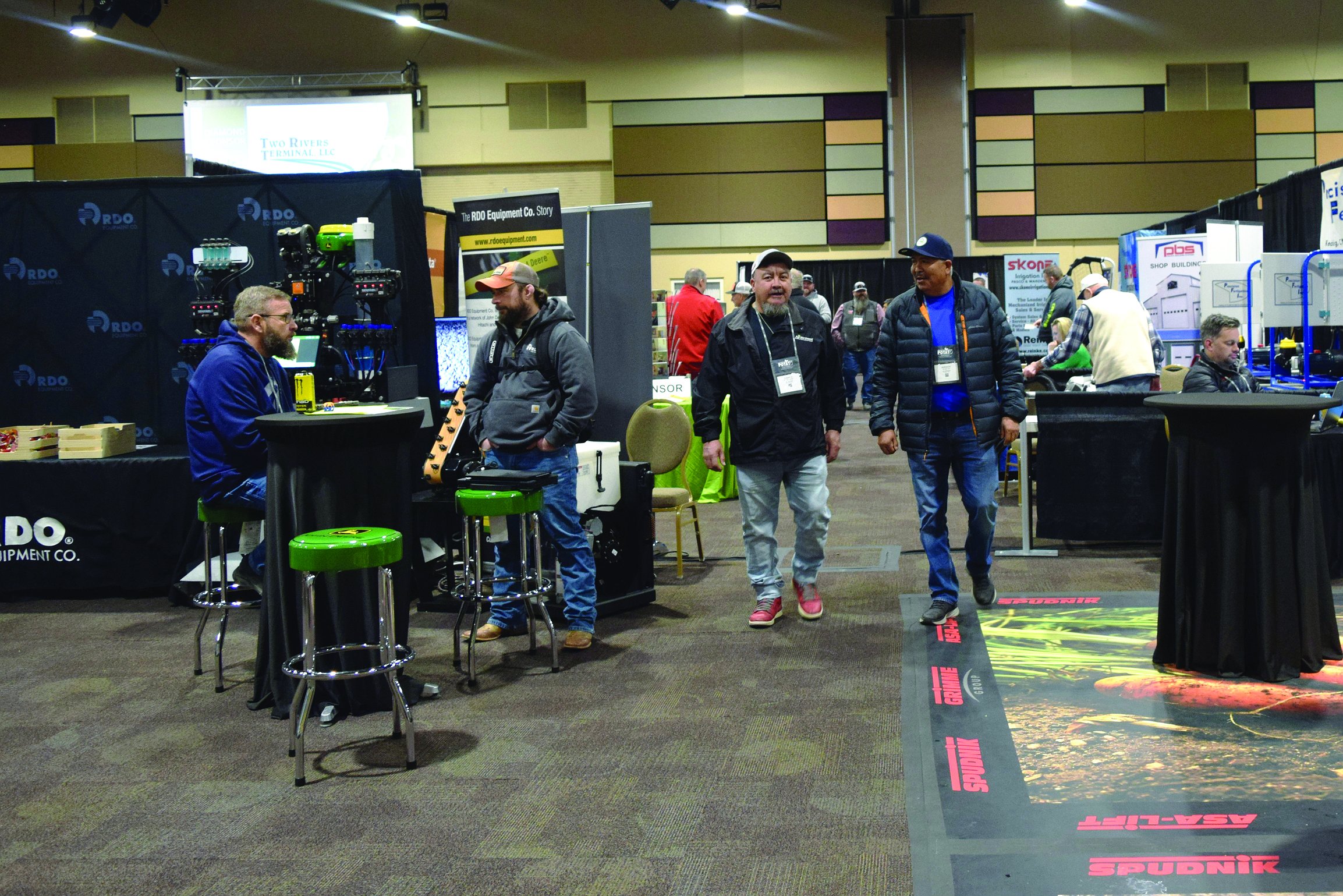 The trade show at this year’s Washington-Oregon Potato Conference features more than 260 exhibitors from all sectors of agriculture.
FILE PHOTO
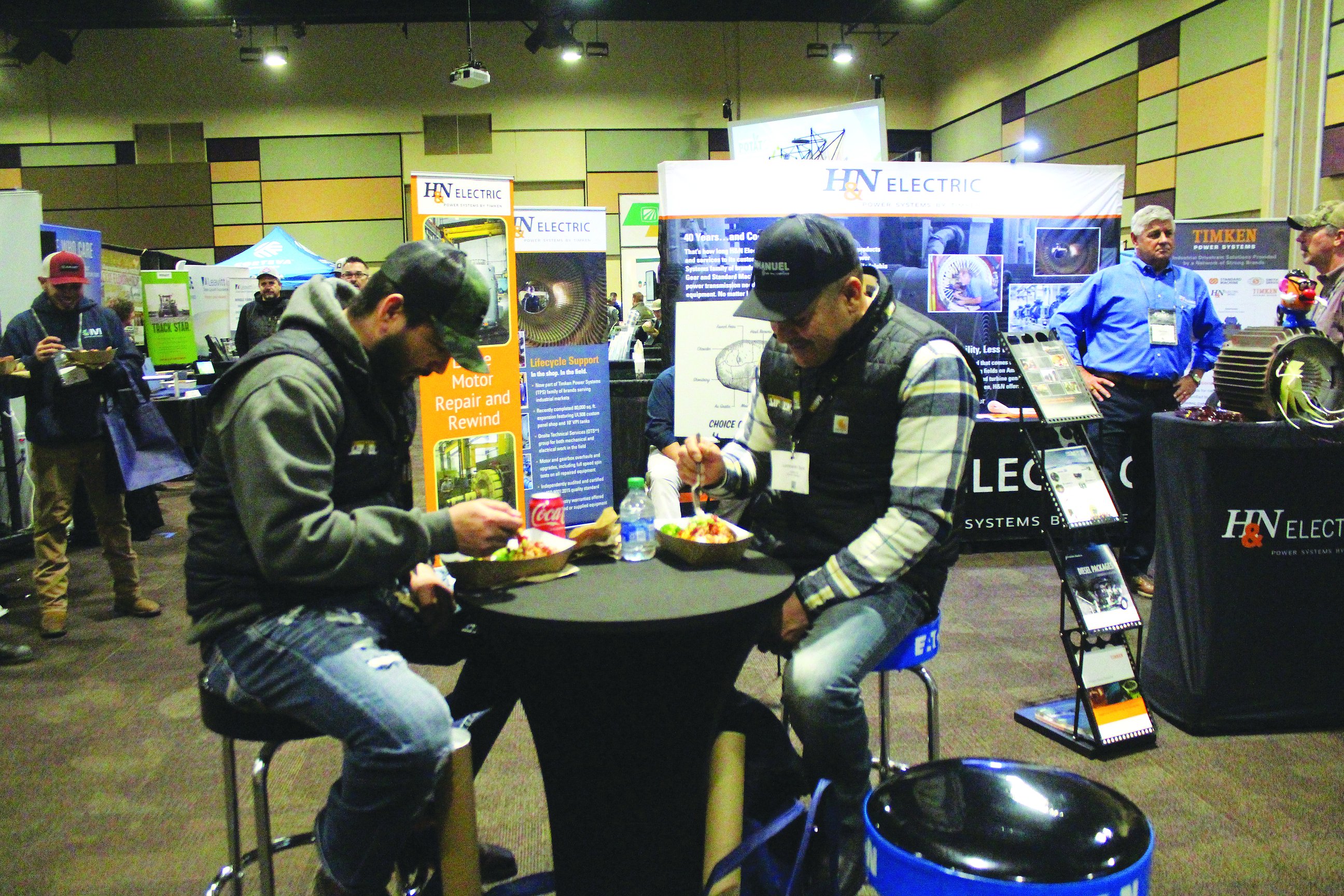 Attendees at the potato conference dig into the baked potatoes served by Washington, Oregon and Idaho potato commissioners.
FILE PHOTO
Washington Oregon Potato Conference Speakers
Jake Blauer
Jacob Blauer is an assistant professor at Washington State University, has hands-on experience on the family farm and in the potato processing industry. Blauer is interested in potato plant physiology, both in the field and after harvest, and the impact and interaction of molecular biology and biochemistry on crop yield as well as postharvest quality. Blauer received his PhD from WSU.
Carlos Bonilla
Carlos Bonilla is the director of Oregon State University’s Hermiston Agricultural Research and Extension Center, where he leads research, extension programs, and stakeholder collaboration. An agricultural engineer, he holds a master’s in Engineering Sciences from Pontificia Universidad Católica de Chile and a Ph.D. in Soil Science from the University of Wisconsin–Madison. Before joining OSU, he served as a professor in the Department of Hydraulic and Environmental Engineering at Universidad Católica de Chile.
Amy Charkowski
Amy Charkowski is a professor in the Department of Agricultural Biology at Colorado State University, where she leads research on necrotrophic bacterial pathogens that impact major crops, especially potato. Her program focuses on Pectobacterium and Dickeya species, studying how these pathogens infect plants and how best to detect them in agricultural and environmental settings. Charkowski’s lab also investigates high-impact potato viruses, including Potato virus Y, with projects centered on resistance and diagnostic methods. At CSU, she teaches plant bacteriology and contributes to advancing plant health through research, outreach, and training of future plant pathologists.
Brian Charlton
Brian A. Charlton is the Director of Oregon State University’s Klamath Basin Research and Extension Center, where he leads research and outreach programs supporting regional agriculture. A longtime OSU faculty member, he specializes in potato variety development, cultural management, pest and disease control, seed production, and irrigation efficiency. Charlton also serves as OSU’s Klamath Basin Potato Faculty Scholar.
Max Feldman
Max Feldman is a research geneticist with the USDA-ARS focused on potato germplasm enhancement, particularly discovery and introgression of disease resistance loci and other beneficial alleles from wild or primitive germplasm and the development of marketable potato varieties. Feldman possesses over 20 years of agricultural research experience primarily focused on using forward and reverse genetics to better understand the mechanisms underlying plant traits.
Ken Frost
Ken Frost is a plant pathologist at OSU’s Hermiston Agricultural Research and Extension Center. His research focuses on the ecology, epidemiology, and management of pathogens that cause diseases of irrigated vegetable crops. Frost received his master’s and Ph.D. from the University of Wisconsin, Madison.
Alex Karazec
Alexander V. Karasev is a Distinguished Professor in the University of Idaho’s College of Agricultural and Life Sciences, specializing in plant virology. His research focuses on virus–host interactions, pathogenicity factors, and major crop diseases affecting potatoes, legumes, sugar beet, cereals, and grapevine. Karasev leads both basic and applied research programs, advancing virus detection, strain differentiation, and management strategies. A globally recognized expert, he also directs collaborative initiatives addressing Potato Virus Y and other economically significant pathogens.
Chakradhar Mattupalli
Dr. Chakradhar Mattupalli is an Assistant Professor of Plant Pathology at Washington State University’s Mount Vernon Northwestern Washington Research and Extension Center. A WSU faculty member since 2021, he leads the Berry and Potato Pathology program, focusing on diseases affecting highbush blueberry and potato crops. His research and extension efforts address disease biology, epidemiology, and management to support Washington’s specialty crop industries. He holds a PhD in Plant Pathology from the University of Wisconsin–Madison, along with earlier degrees in horticulture and agriculture.
Amber Moore
Amber Moore is an associate professor at Oregon State University’s Corvallis Campus in the College of Agricultural Sciences Crop and Soil Science group. The focus of her position is to conduct applied research and develop nutrient and lime recommendations to improve nutrient use efficiency by large acreage crops. Her primary focuses are potatoes, grass grown for seed, cereals and a secondary focus on minor crops such as peppermint, vegetables and berries, among others.
Mark Pavek
Mark Pavek is a professor and potato specialist at Washington State University. Pavek specializes in sustainable production, competitiveness, and profitability for the Northwest potato and vegetable industries and developing new, economically superior potato cultivars and variety-specific best management practices. He has participated in the release of 32 varieties of potatoes with the Northwest Potato Variety Development Program since 2003.
Kam Quarles
Kam Quarles has been the CEO of the National Potato Council since 2019 and has been a frequent speaker at the Washington-Oregon Potato conference. As a national leader in the fruit and vegetable industry, Quarles serves as co-chairman of the Specialty Crop Farm Bill Alliance, and as a member of the USDA/USTR Agricultural Trade Advisory Committee. Quarles holds a bachelor’s degree in Political Science from the University of Southern California and a master’s degree in International Commerce and Policy from George Mason University in Virginia.
Blair Richardson
Blair Richardson has been the CEO of Potatoes USA since 2013. Richardson earned his bachelor’s degree from Texas A&M University in 1989.
Gary Roth
Gary Roth is the executive director of the Oregon Potato Commission and has served in that capacity since May 2019. He has worked in both the public and private sectors and holds a bachelor’s degree in Agricultural and Resource Economics from Oregon State University.
Sagar Sathuvalli
Sagar Sathuvalli is a potato breeder and an associate professor of Plant Breeding and Genetics at Oregon State University. He holds the Oregon Potato Research/Extension Endowed Professorship. He networks broadly across the United States and internationally for potato improvement and is especially interested in developing new russet potato varieties with improved resistance to biotic and abiotic stress responses and developing genetic and genomic resources for potatoes.
Alan Schreiber
Alan Schreiber is the president of Agricultural Development Group, Inc. He has more than 30 years of expertise in entomology, pesticide toxicology, pesticide resistance, pesticide registration and consulting. He has worked extensively with agrichemical companies and agricultural commodity groups during his career.
Raina Spence
Raina Spence is a manager with the Washington, Idaho and Oregon potato commissions’ Northwest Potato Research Consortium, focused on solving problems and advancing potatoes regionally. As part of the consortium, she is focused on ensuring growers receive research associated with growing potatoes.
Chris Voigt
Chris Voigt has been in the potato business for a very long time. A graduate of Oregon State University with a degree in Agricultural Economics, He has served on the U.S. Potato Board and on the Colorado Potato Administrative Committee and has been the Executive Director of the Washington State Potato Commission for more than 20 years.
Tim Waters
Tim Waters is an area extension educator at Washington State University with specialties in pest management in vegetable crops; vegetable variety development; alternative cropping systems; and potato and vegetable production. He holds a bachelor’s degree in Biology, a master’s in Entomology and a doctorate in Entomology, all from WSU.
Jonathan Whitworth
Jonathan Whitworth is a research plant pathologist with the US Department of Agriculture-Agricultural Research Service, based in Aberdeen, Idaho. Whitworth’s area of expertise is small grains and potato germplasm research, looking at, among other things, potato genetics to improve sustainable production. He’s also studied ways to control nematodes in potatoes, implementing techniques to diagnose and manage potato disease and ways to manage potato diseases.
Carrie Wohleb
Carrie Wohleb is a regional vegetable crops specialist with Grant/Adams County-WSU Extension in Moses Lake. Wohleb focuses on potato production, regional potato insect pest surveys and pest and disease management in vegetable crops. She received her undergraduate degree from the University of Washington; she earned her master’s degree and Ph.D. from Washington State University. She has been a member of the WSU faculty since 2008.
Inga Zasada
Inga Zasada works for the US Department of Agriculture-Agricultural Research Service, and conducts her research at Oregon State University.
“My lab’s primary goal is to develop nematode management strategies for Pacific Northwest small fruit industries,” she wrote. “Plant-parasitic nematodes can cause considerable yield loss in perennial fruit production systems if left unmanaged. Current research includes: identification of nematode resistance in red raspberry; elucidation of the population biology of virus-transmitting nematodes and; evaluation of cover crops, nematicides and amendments in small fruit production systems for nematode control.”
She earned her PhD at the University of California-Davis.