

Putting on a show: There’s a lot of work that goes on behind the scenes of a trade expo
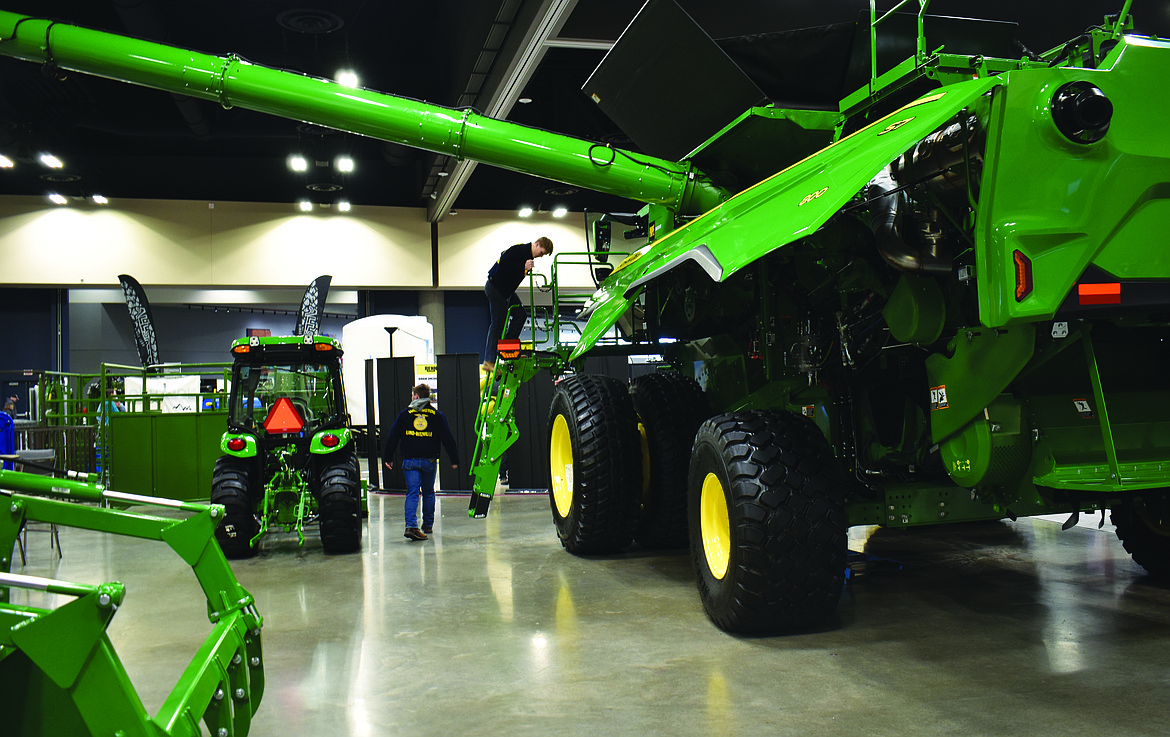
Attendees check out the equipment on display at the Spokane Ag Show. Moving the machinery into an indoor space in downtown Spokane is just one of the logistical challenges of organizing a trade show, said organizer Diahne Gill.
File photo
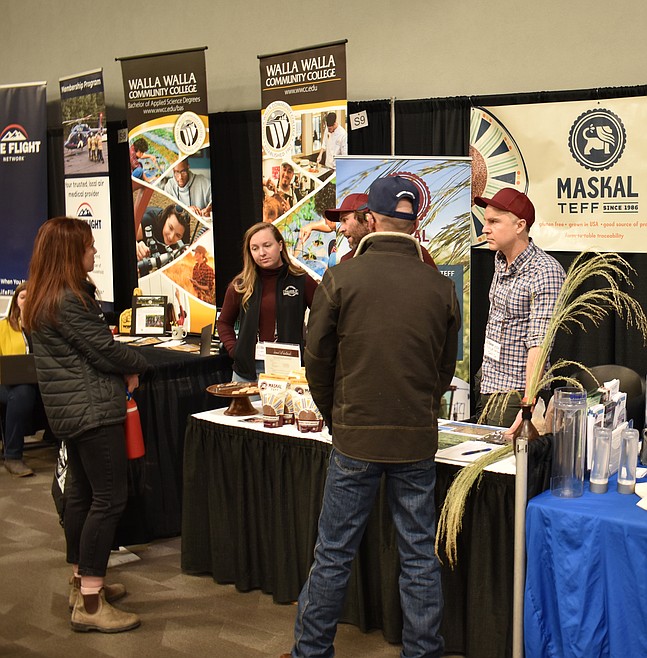
Maskal Teff representatives talk with visitors at the Spokane Ag Show. Trade shows are an opportunity for producers like Maskal Teff to get new products in front of both industry professionals and consumers.
File photo
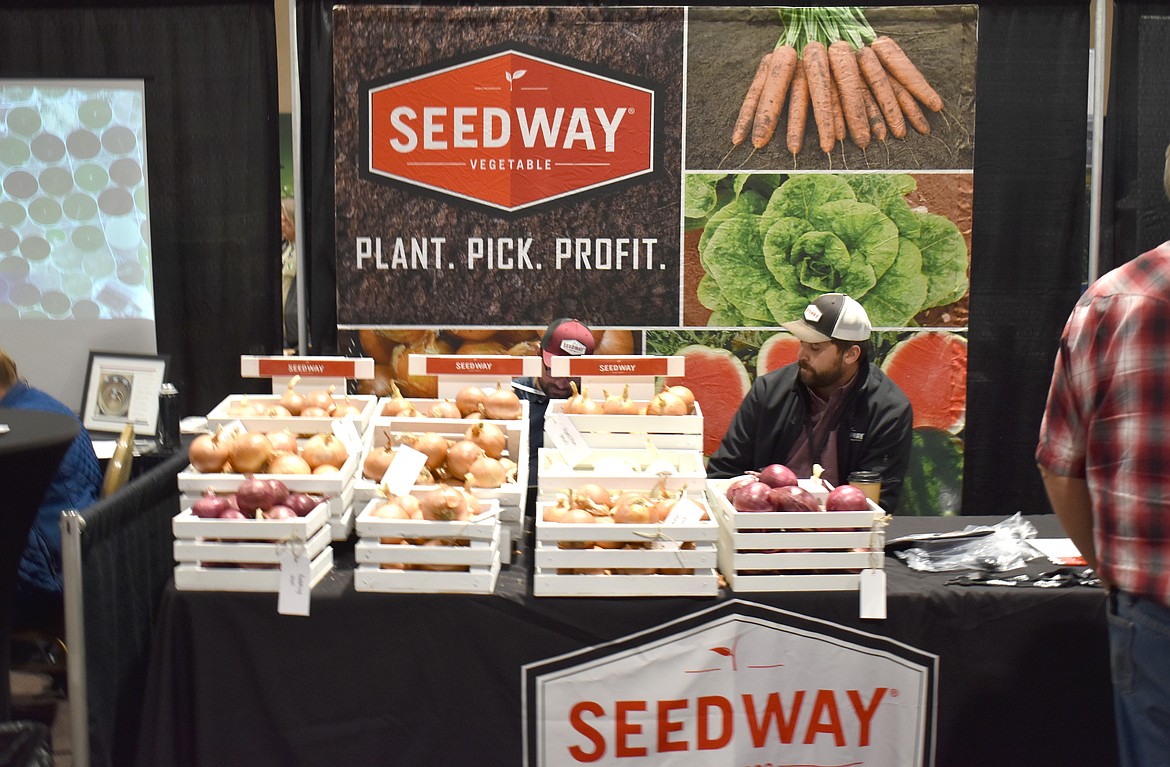
Seed onions are on display at the trade show at the Pacific Northwest Vegetable Association Conference. Most of the exhibitors at the conference are regulars who some every year, said coordinator Sheri Nolan.
File photo
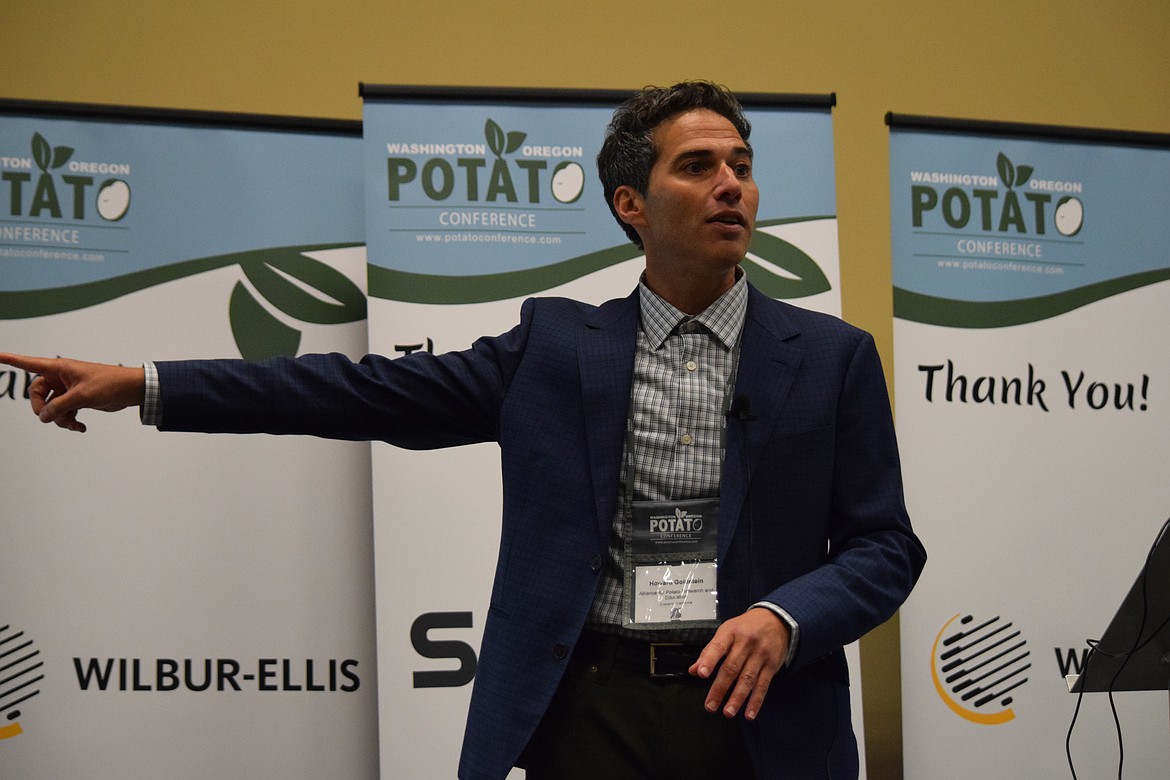
A speaker at the Washington-Oregon Potato Conference. Setting up conference space and coordinating the speakers is a large part of the process of putting together a trade show, organizers said.
File photo
When the harvest is over and winter sets in, that’s the season for agricultural trade shows. From crop-specific events to the enormous Spokane Ag Show, tens of thousands of people pour into expos, conventions and shows in Washington. Those don’t just spring up out of nowhere.
“There are so many small things on the back end that people (don’t see)” said Sheri Nolan, an account manager at Ag Association Management. “(They just) walk up, they grab their name tag, they go to the meeting.”
Nolan organizes seven shows every year as well as summer tours, field days and other public events, she said. Those include the Pacific Northwest Vegetable Association Conference in January, the Mint Convention in December, the Pacific Northwest Direct Seed Cropping Systems Conference, the Western Alfalfa Seed Growers Winter Convention and the International Fruit Tree Association Annual Meeting.
“You start with your facility,” Nolan said. “(Some events) are stationary. We usually contract those three years out, because we’re on the same dates each year or similar. In addition to that, we also deal with the local hotels, to put together room blocks for our attendees at a discounted rate. Since we’ve been going so long, we base it on history. (For example) last year we had used 40 rooms on the peak night at the SpringHill Suites, we’ll contract that. They’ll give us a special rate and, and we’ll promote that to get attendees. And then once the block is full, then people are on their own from there.”
Not all the conventions take place in the same city every year, Nolan said; some of them rotate between two or three locations. The IFTI convention moves around both the U.S. and Canada, which Nolan said creates its own set of challenges.
“In Canada, you’re dealing with the currency exchange,” she said. “When you’re developing your budgets, you have to (take that into account) because it changes. When you actually pay the bill, it could be a different conversion rate.”
The Spokane Ag Show is one of the largest trade shows in the Northwest, drawing about 4,500 people to the Spokane Convention Center for its three-day program. There’s a full slate of speakers, as well as a trade show displaying everything from heavy equipment to seed samples to high-tech gizmos. That’s no mean feat, said Diahne Gill, executive director of the Northwest Natural Resources Institute, which puts on the expo every February.
Planning begins close on the heels of the previous show, she said.
“We do out recap meeting in March, and in April we start planning for the next year,” Gill said. “We identify potential speakers, potential exhibitors, and then we come up with a marketing plan, lay out the media and go from there.”
The Spokane Ag Show doesn’t move around; it’s always held at the Spokane Convention Center, the second-largest venue of its size in Washington. A centerpiece of the event is the trade show held in an open 120,000-square-foot indoor space, where businesses of all kinds set up booths. It’s not too difficult for, say, a seed producer or insurance agency to set up, but the heavy equipment dealers take some jockeying, Gill said, particularly since the convention center is located on one of the busiest areas in the city. To facilitate the move-in, Gill said, there’s a staging lot about a mile from the convention center where the exhibitors bring their vehicles. The machinery is moved down Division Street and across the river on Sunday, two days before the show begins, when there’s likely to be less traffic.
“Hotsy of Spokane provides the power washing so the equipment comes in clean,” Gill said. “We get them in, get them on the floor, and then the booths and the smaller exhibitors move in on Monday and by six o’clock Monday night, we’re ready to go.”
The process is reversed on Thursday to get the equipment back out, this time through weekday traffic.
“We hire an off-duty police officer to help with traffic control, pulling out those big machines back out to Division. It’s a well-oiled machine.”
Much of the purpose of a trade show is to provide information that benefits growers and the folks who do business with them, and a lot of effort goes into finding informational speakers and presenters.
“What we do is we break it down by session, because you have people who are so knowledgeable within that particular portion of the industry,” Nolan said. We have the onion session, or the pest management session and we put together committees that work on those sessions who know what’s going on right now that’s relevant to the industry. And on top of that (university) extensions are pivotal in getting these programs together … Once (the board members) confirm the speakers, they will pass it off to me. At that point I reach out to all of the speakers, and I work with them on the titles of their presentation.”
Nolan works with the venue’s staff to set up and schedule conference rooms, she said.
“I choose … how I want each room set up, what my audio-visual is, how many people I want it set up for,” she said. “Do I want it classroom? Do I want it theater? Do I need extra tables?”
“There’s so many little details that you just don’t think about,” Gill said. “We rent out the arena parking lot so people can park up there for free and we provide shuttle buses to shuttle people back and forth so that they don’t have to pay for parking downtown. On Thursday, we have our FFA day where we provide a keynote, inspirational speaker and a career fair to these kids. And we have usually about a thousand regional FFA kids that come.”
Gill couldn’t do her job without a dedicated team of 50-70 volunteers, she said.
“The volunteers make it smooth,” she said. “I can’t thank them enough. It’s an amazing group of people.”
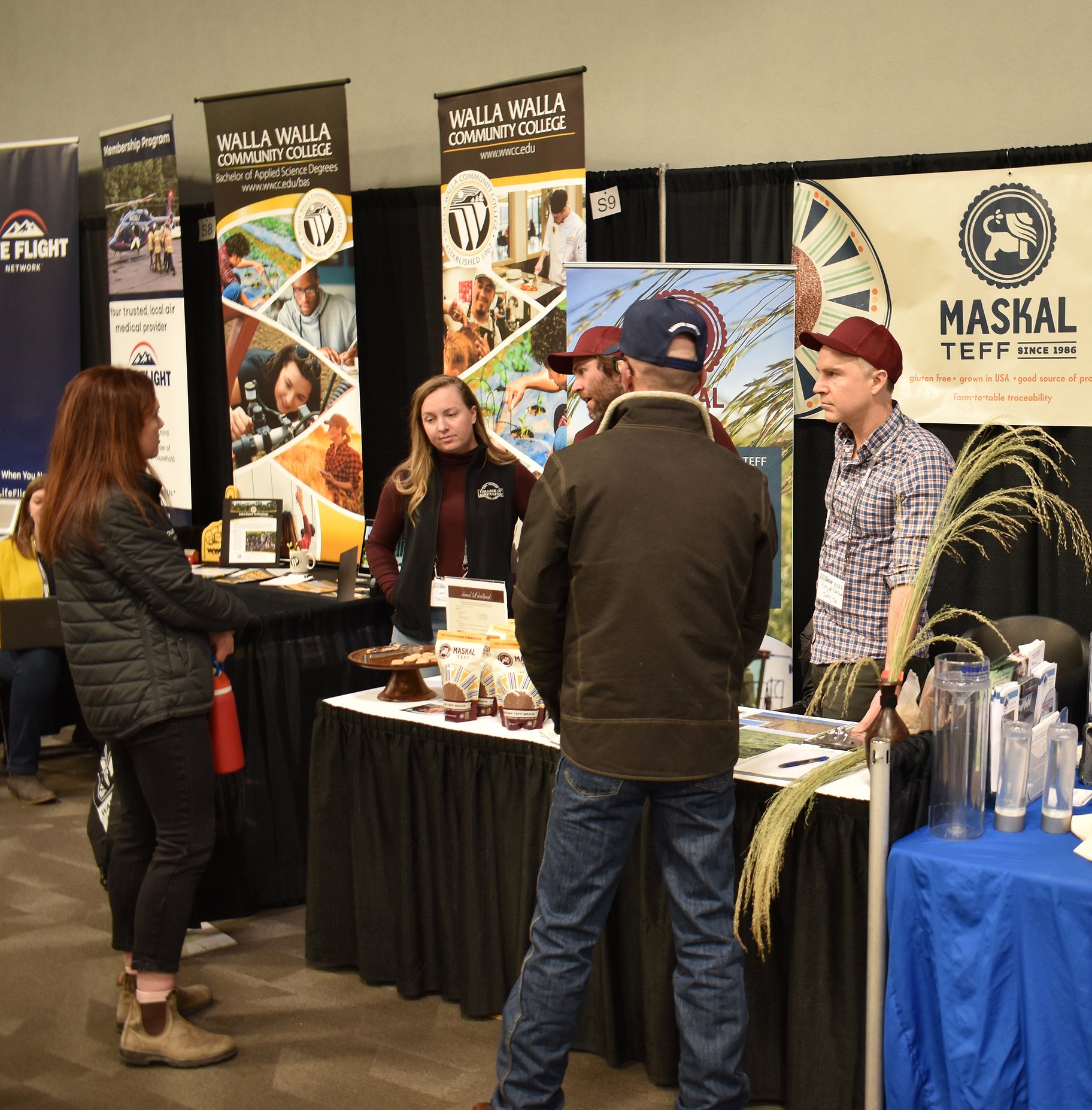 Maskal Teff representatives talk with visitors at the Spokane Ag Show. Trade shows are an opportunity for producers like Maskal Teff to get new products in front of both industry professionals and consumers.
File photo
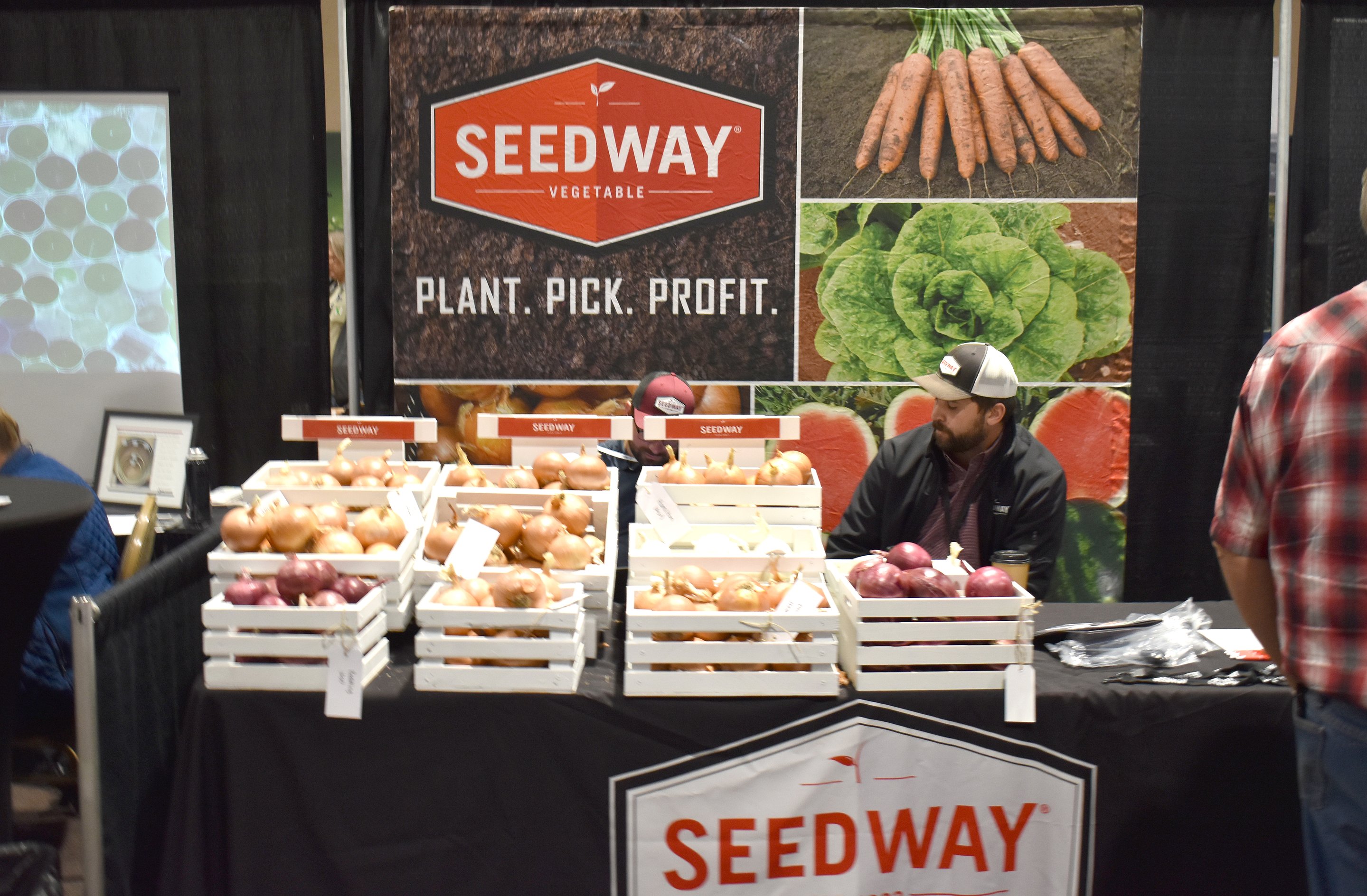 Seed onions are on display at the trade show at the Pacific Northwest Vegetable Association Conference. Most of the exhibitors at the conference are regulars who some every year, said coordinator Sheri Nolan.
File photo
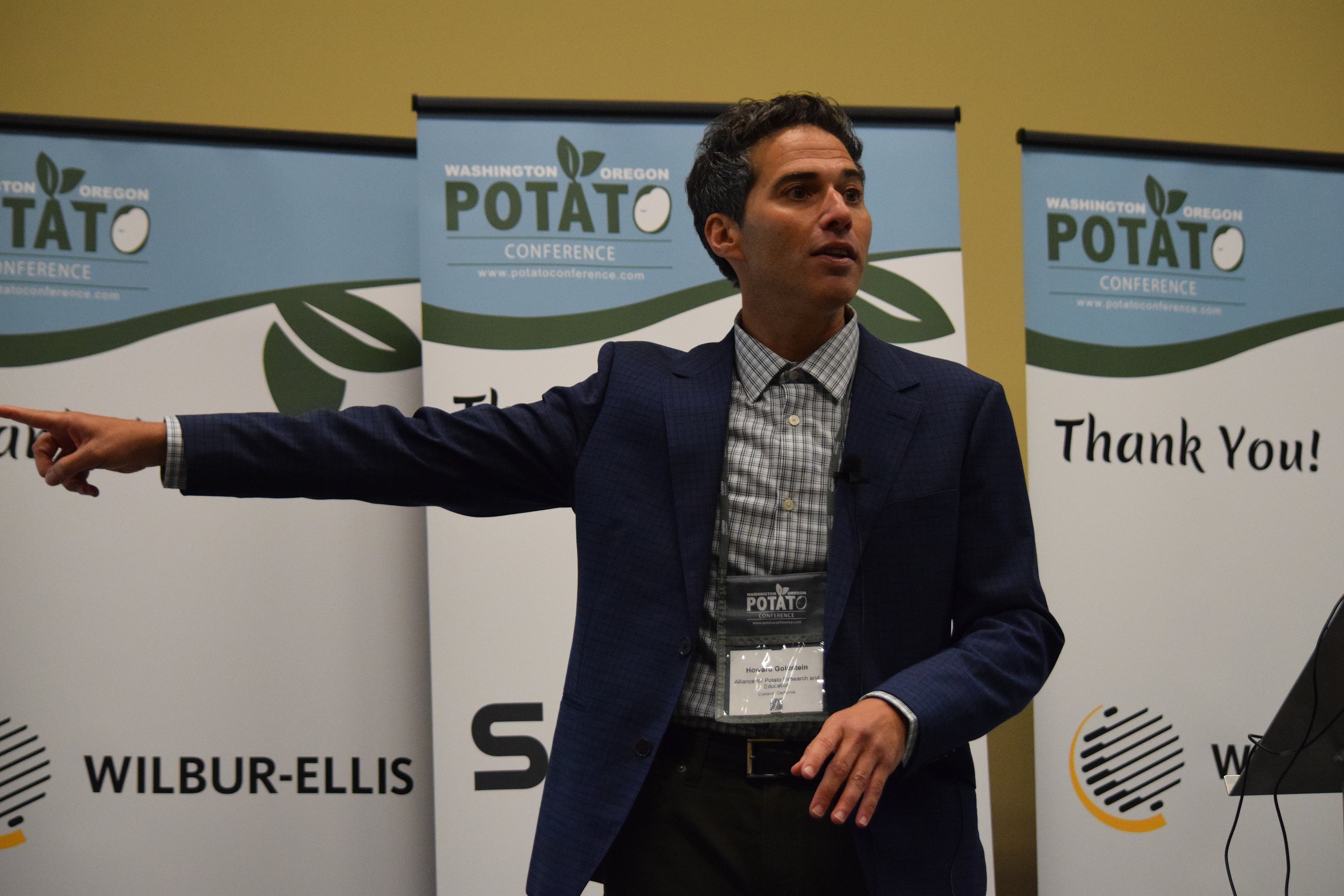 A speaker at the Washington-Oregon Potato Conference. Setting up conference space and coordinating the speakers is a large part of the process of putting together a trade show, organizers said.
File photo