

After some rough years, apple market may be improving in 2026
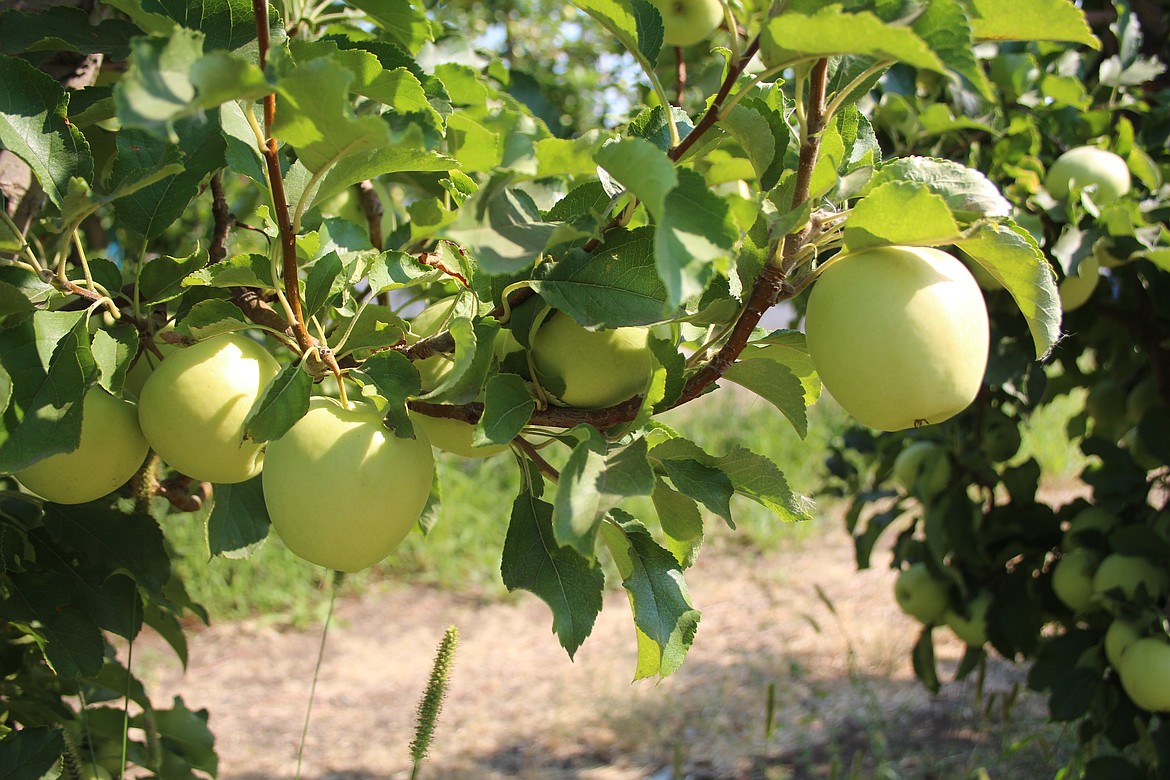
Pricing has been trending up as the 2025 apple crop gives way to the 2026 harvest.
Cheryl Schweizer/Basin Business Journal
OTHELLO — It’s been a rough few years for apple and pear growers, but 2026 looks like it could bring better news.
Large apple crops, big swings in the pear crop, inflation that led to dramatic increases in production costs have all affected the industry over the past three or four years. Nor were those all the challenges – snow fell while apple trees were in bloom, drought plagued the Yakima Valley and in 2026, affected all Central and Eastern Washington.
However, said Jon DeVaney, president of the Washington Tree Fruit Association, 2026 looks like it will be better for apples and pears.
“The pricing has been trending up through the final marketing weeks of the last year’s crop, and so that’s been an encouraging sign for growers. The pricing is expected to stay fairly strong relative to the past few years going into this next year’s crop,” DeVaney said.
The apple crop in Pennsylvania and Virginia suffered winter damage, losing as much as half their projected yield, DeVaney said.
“They’re far less production than Washington, but that does alter the total size of the national apple crop,” DeVaney said. “That should support continued fairly strong pricing. It’s not always directly correlated, supply and demand, but having a slightly smaller crop should help keep that price.”
Washington produces about 68% of the fresh apples grown in the United States, according to the U.S. Department of Agriculture.
Bad winter weather led to significant damage for the 2024 pear crop, which was the smallest in about 40 years, DeVaney said. The 2025 crop rebounded to the point that it left growers with a lot of pears to sell. But 2026 looks to be less of a roller coaster, he said.
“There was a lot of pest pressure in some areas on pears, based on weather conditions. That can depend on where you are as well,” he said.” I think the good news for them is after a few years of really volatile production, things are looking a bit more stable.”
North Central Washington pear growers, especially in the Okanogan County area, sustained some winter damage.
“Overall the crop is looking to have stabilized for pears,” he said.
Conditions have prompted the WSTFA to revise its crop estimate system, since some of the fruit that was on the trees in July and August 2025 didn’t get picked in September and October. The tree fruit association will release its estimates after harvest is over, DeVaney said, to provide a more accurate estimate of what actually was picked.
The USDA has provided a pre-harvest estimate, which DeVaney said is comparable to the three to five-year average. The three-year average is the equivalent of about 129 million 40-pound boxes, he said.
“We are expecting it to be down slightly from last year, based on that estimate, but still a very normal crop for Washington,” DeVaney said. “And in fact, what growers are telling me is that the crop quality they’re seeing looks excellent. There have been concerns because of the amount of drought out there, smoke, and other issues that could have affected things. But what they’re seeing is really strong quality coming off the trees, good color development, and really good eating quality.”
The tough times have taken their toll – orchards have been coming out. DeVaney said the WSTFA is in the process of conducting a survey to determine how much acreage has been lost. That, however, is not the only problem.
“Orchards are not coming out but being under-farmed – that’s the bigger danger for a lot of our growers,” he said. “If certain producers, given multiple years of losses, reach the end of their ability to actively farm, if they’re no longer being extended operating lines of credit, and they’ve exhausted their own resources, you can have trees that are still in the ground, but are not being actively farmed. That can become a pest problem for neighbors.”
The WSTFA worked with Washington legislators to obtain about $500,000 to assist local pest control boards to remove orchards that are no longer in production.
“What we’re being told is that yes, some acreage is coming out. There are still some acreages, you know, some blocks of newer plantings that are still coming into full production that were planted several years ago,” he said.
Growers, of course, are always looking for ways to control production costs, and the challenging market conditions have increased their interest.
“A lot of that is being much more intentional about what gets picked because harvest cost is a big part of your overall production budget, and so that selectivity at harvest is a big factor,” he said. “Also, looking at new technologies that might allow for more efficient operations. Labor is the biggest input cost for tree food production in a lot of Washington’s specialty crop agriculture.”
Growers are investing in technology that can cut the amount of labor needed, DeVaney said, citing the example of irrigation management.
“You can turn on and off sprinkler systems with remote access through a laptop or (a phone), do that from your home instead of paying an employee to go out and turn on and off those systems,” he said. “You can save some of those costs, and those kinds of automation solutions are what a lot of growers are looking for. How can they make the most of the workforce that they have?”
Research is continuing into automating more harvest operations, he said, but ultimately it will depend on the technology cost.
“Most growers don’t think that’s going to just wholesale take over their production, their harvest operations,” DeVaney said. “But if it allows you to, for example, hand pick some of the fruit that is going for the fresh market, then send an automated harvester in to get what might go to processor, your costs may be lower then, but you can still have some return. Those economic models haven’t quite been figured out.”