

Yakima Valley’s Rattlesnake Hills AVA is producing exceptional grapes – and wine
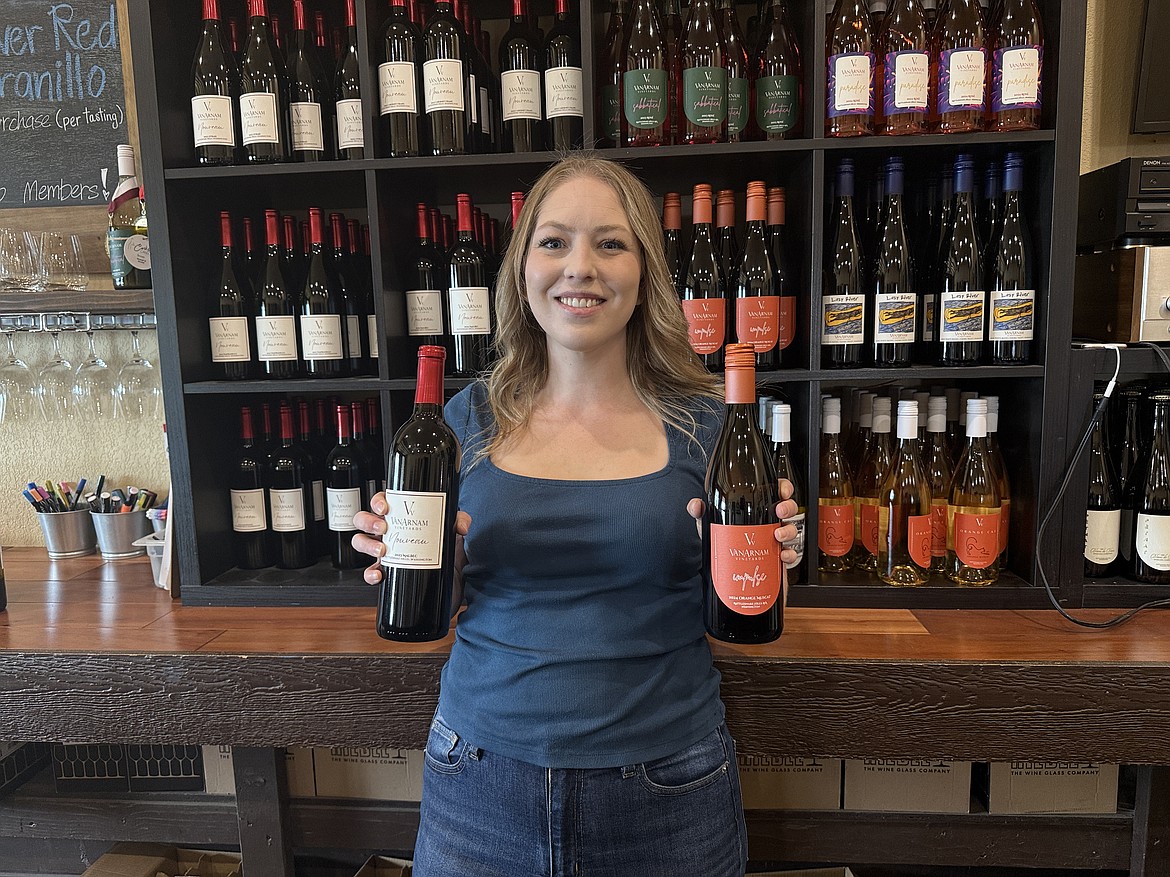
Kaela Seymour, co-owner of VanArnam Vineyards, holds bottles of a 2023 malbec and a 2024 orange muscat.
Ken Smith/Basin Business Journal
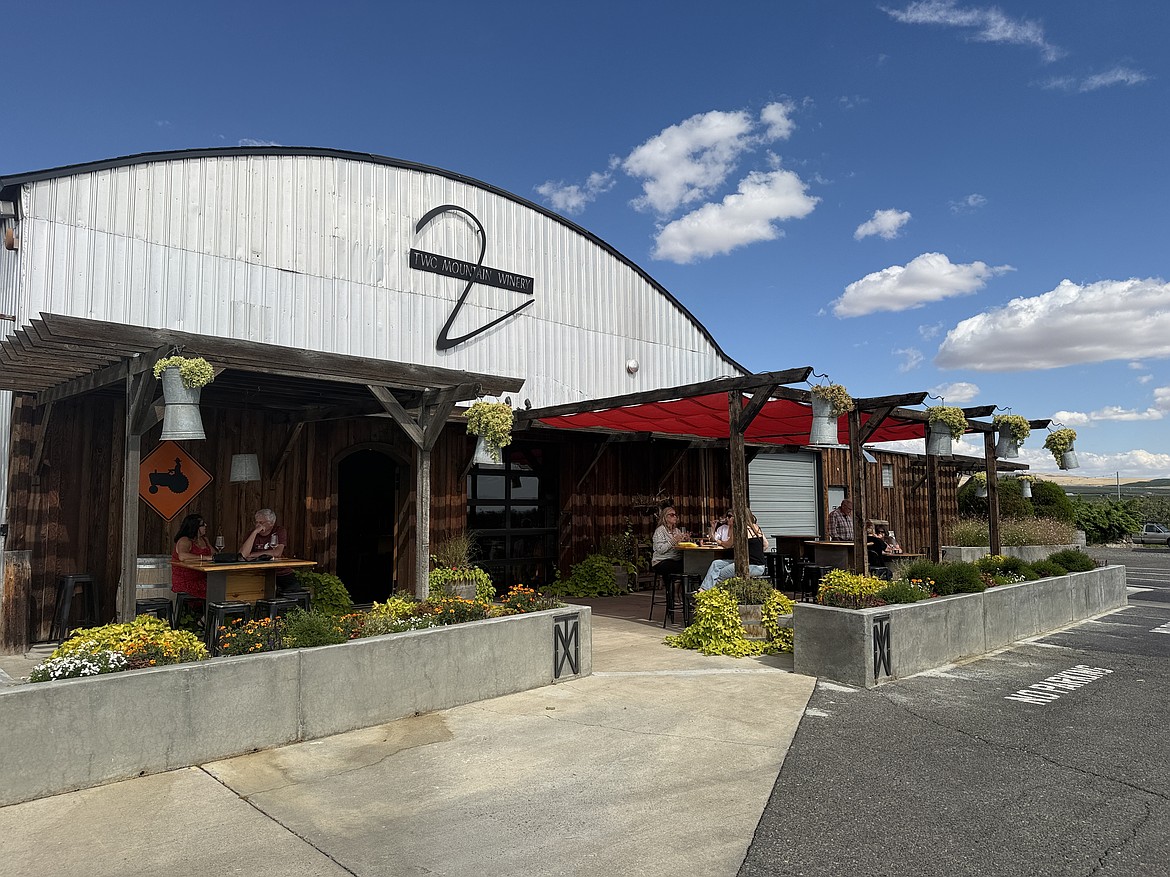
Two Mountain Winery’s tasting room offers an outside seating area as enjoyed by some visitors on a sunny Labor Day.
Ken Smith/Basin Business Journal
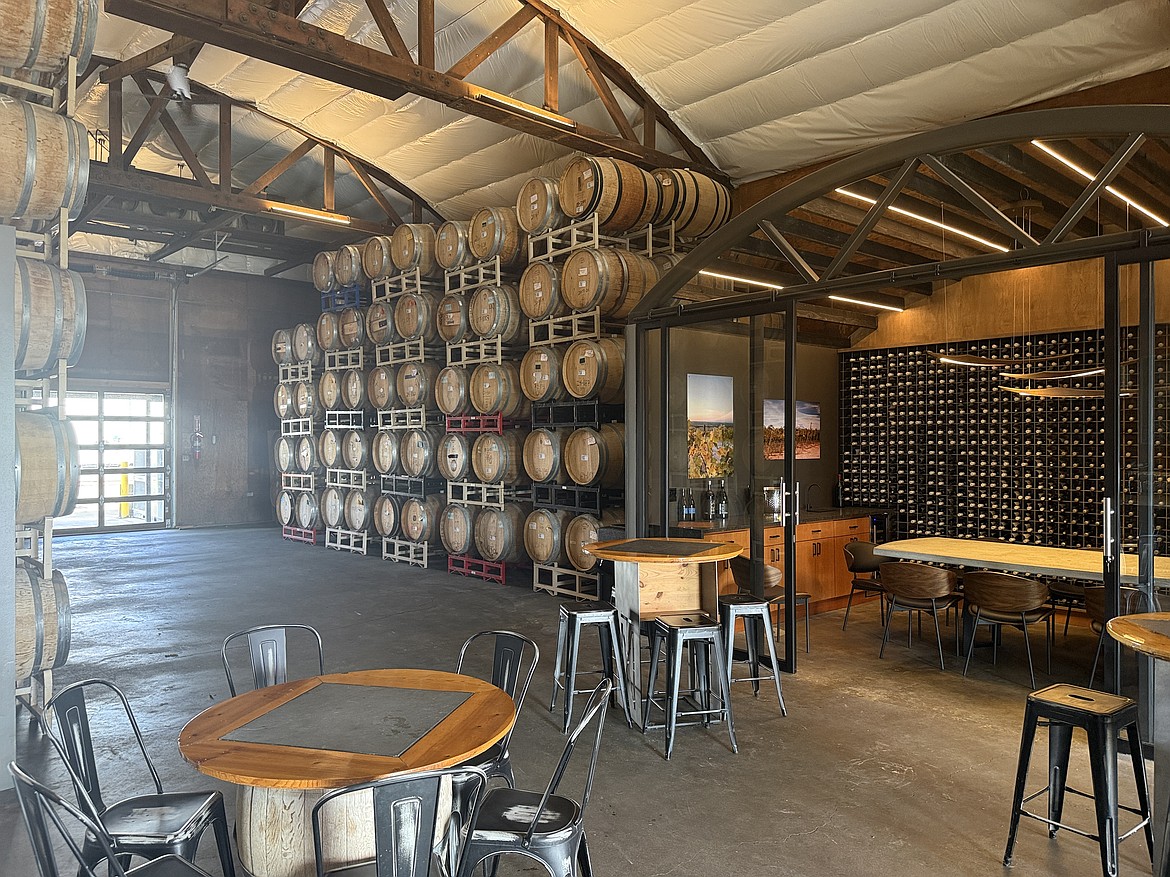
Barrels of wine line walls of Two Mountain Winery.
Ken Smith/Basin Business Journal
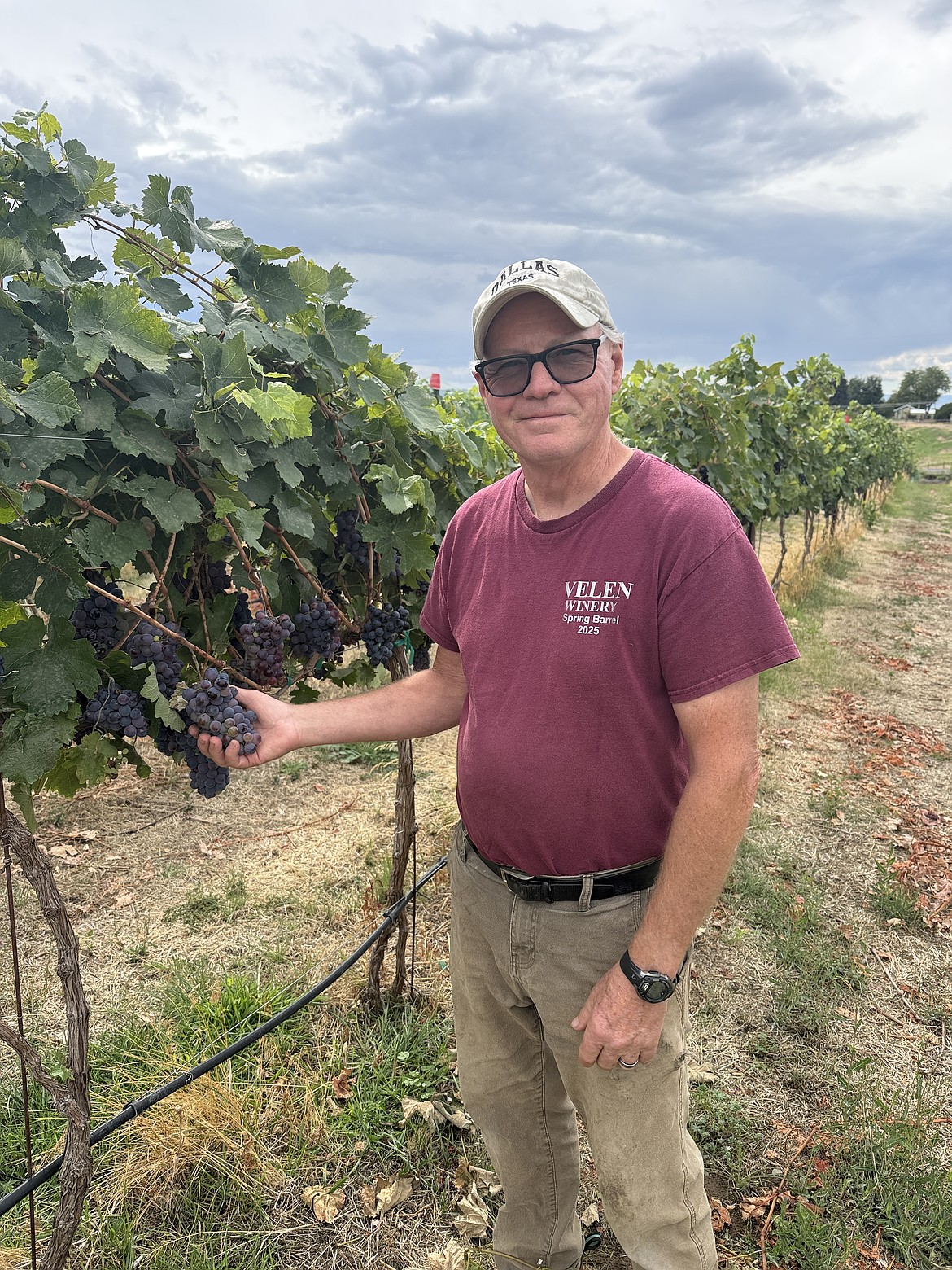
John Otis, owner of Velen Winery, holds some grapes growing on his 4-acre estate.
Ken Smith/Basin Business Journal
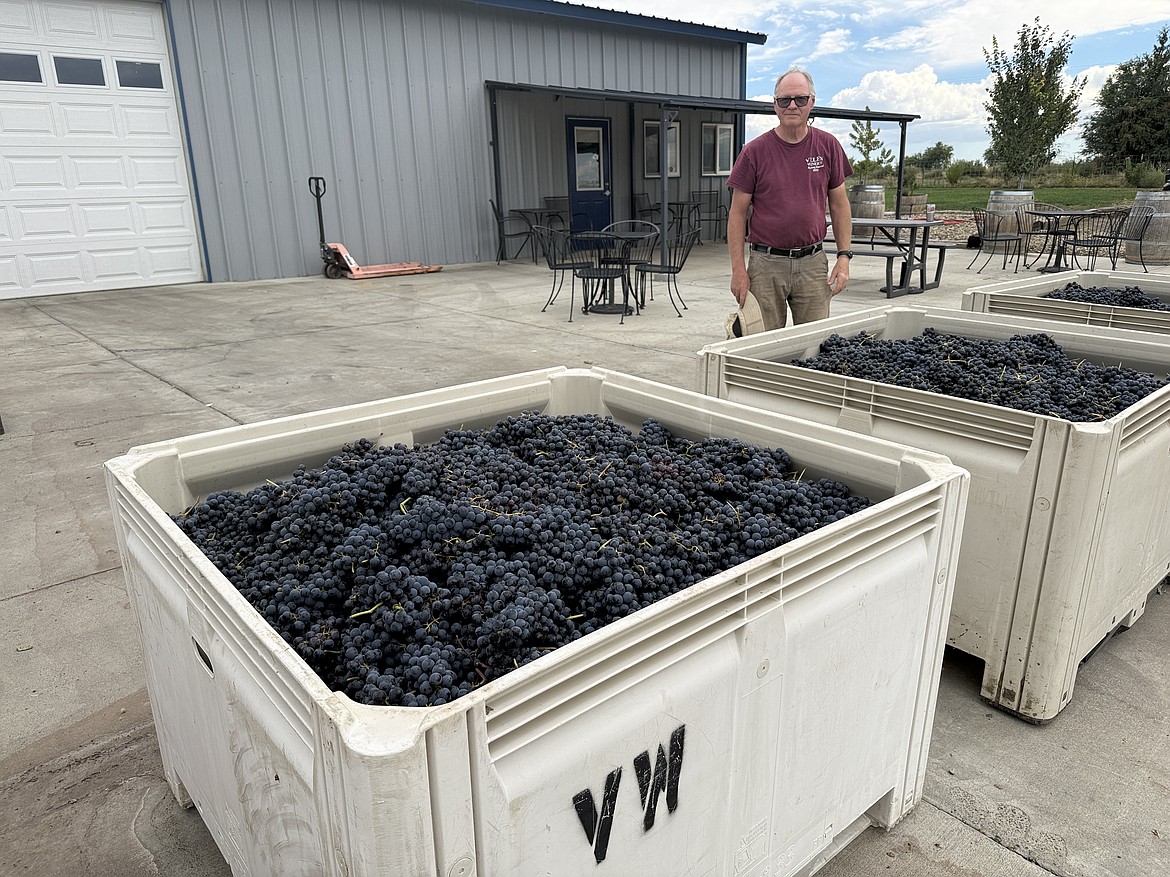
Fresh-picked cabernet grapes sit waiting to be turned to wine.
Ken Smith/Basin Business Journal
YAKIMA — Across the Rattlesnake Hills American Viticultural Area near Zillah, vineyard owners were preparing for what many expect to be another strong vintage. From multi-generational farming operations to small family-run wineries, the region’s unique native soil and high elevation continue to produce some of Washington’s most distinct wines.
The Rattlesnake Hills AVA sits above much of the landscape shaped by the ancient Missoula Floods. Unlike many nearby regions, the hills escaped the floods, preserving older soils that today contribute to much of the area’s exceptional growing conditions.
Elevations ranging from roughly 850 to 1,500 feet create cooler temperatures and growing conditions that help develop complex fruit characteristics prized by winemakers.
As described in The Hills – Rattlesnake Hills AVA brochure, the soil is “rooted in ancient uplifted sediments – a distinctive foundation for wines of freshness, complexity, and unmistakable character.”
Two Mountain Winery is co-owned by brothers Patrick and Matthew, who established the business in 2002. They come from a farming family, but transitioned from fruit growing to winegrowing, bringing with them a deep knowledge of the land and an understanding of the special soil that is the distinctive foundation of Rattlesnake Hills.
“We wanted to do our own thing,” he said. “The wine industry was really young and growing and interesting, and Washington wines were being put on the map.”
Two Mountain is one of 18 wineries in the Rattlesnake Hills AVA range in Zillah. Many of these wineries evolved from farms primarily growing fruit. Two Mountain is one such farm. Now focused entirely on wine, Two Mountain sells grapes to about 100 wineries around the state, and a dozen or so in Oregon, and produces its own wines off their vineyards on 150 estate acres.
The 2026 year is shaping up to be a strong vintage, Patrick said.
“Quality looks great for the year,” he said. “We’re really just getting started. We’ve been picking slowly here for a couple of weeks but just getting ramped (up) here. We’re excited about what we’re seeing so far and the little bit we brought in.”
But it will take a couple of months when the wine is produced to really determine the quality as it stands with past vintages. They will be making their set wines: cabernet, cabernet franc, syrah, sauvignon blanc, dry riesling and chardonnay. Wines with a quality and standard that only can come from this special region where they grow.
“The soil profiles here are different than the other parts of the Yakima Valley,” said Patrick. “Rattle Snake Hills is wholly inside the Yakima Valley. If you see a wine that’s labeled Napa Valley, that’s the AVA, or Columbia Valley-that’s an AVA and those have to be recognized. The distinguishing features are our elevations, our soil profiles, and these are the key differentiating features that makes the wine sort of distinctly different, finished wines distinctly different.”
Washington is still a young wine state, he said, given wine producing goes back thousands of years, and the state has been a wine producer for about 40-50 years. But in that short timeline, the state has reached a level of producing quality wines that are respected not only for their quality, but also for the sustainable and regenerative techniques employed by many wineries.
“Our interest was in the wine business, and is a risky, hard work endeavor,” he said. “You’ve got to love what you’re doing. We love the wine business, and that’s what we wanted to do.”
While Two Mountain represents one of the region’s larger estate operations, VanArnam Vineyards tells a different story; one rooted in a new generation of winemakers taking ownership of an established vineyard.
Kaela and Branden Seymour, along with family members George and Denise Seymour, Branden’s parents, bought the winery in 2024. The previous owners established the vineyard in 2007, planted vines around 2009, and opened a tasting room in 2010. The growing estate is around 29 acres.
Branden focuses on managing the vineyards and winemaking, while Kaela oversees the internal operations, business, and tasting room. They have embraced the business and strive to apply sustainable and organic growing practices, with sulfur applications for mildew control. They are both local to the area and returned from college to immerse themselves in winemaking and eventually purchased the winery from its previous owners in 2024.
“We moved back and started working,” Kaela said. “He was working as a winemaker. I started working in the room, helping with events and filling in spots here and there, and eventually he wanted to purchase his own winery. We looked at every other place that was for sale, and Kent and Allison, who were the owners here, came to us and said, ‘Well, why don’t you take over this place?’”
Their wine selection is vast and varied. A look at the wine board in the tasting room is representative of their bold and diverse wines: sangiovese, cabernet sauvignon, cabernet franc, tempranillo, syrah, malbec, sauvignon blanc and merlot. They’ve also ventured into sparkling wine, including an organic 2024 Orange Muscat – Impulse.
“We grow a lot of different stuff,” Kaela said. “Traditionally, when the industry first came up and coming back in the ‘80s, it was very much Bordeaux varietals, so cabsauv, malbec, merlot, syrah – those were kind of the pillars. Then chardonnay and riesling, those were the big ones. Now Yakima Valley grows, and we grow tempranillo and sangiovese; we grow syrah, we have albarino, we grow viogiener. Next door there is petit syrah and saperavi, which is a very interesting grape. There’s a lot of different grapes that are grown around here: sauvignon blanc, pinot gris, a bunch of different muscats.”
Every year brings different weather, which shapes the vintage and the final product, and this year was a pretty warm winter, Kaela said, a damp spring, steady summer, and now it’s cooling off going into harvest.
“Branden’s super happy with our vineyard,” she said. “He’s been changing his practices a little too, so we’re learning more. We’re not certified sustainable or organic, but we farm that way because it’s the right thing to do type of thing. We still spray sulfur for mildew control, but that’s about it.”
Like all winemakers, each year presents new weather and varied wines, but they have had consistently high-quality vintage years, Kaela said.
“Every year has been amazing in their own right,” she said. “There’s different wines – they’re all great. It’s just different.”
At the other end of the spectrum is Velen Winery, a boutique operation where owner John Otis manages just a handful of acres of vines but brings decades of winemaking experience to every bottle.
John is the head winemaker of Velen Winery, and owns it with his wife, Rebecca. At 71 years old, Otis still has great passion for the growing process and business of wine. After studying enology, Otis worked as a winemaker in Texas, eventually opening his own winery before relocating to Washington in 2015 to establish Velen Winery.
He planted his first vineyard block in 2016 and opened the winery to customers in 2019. He lives on 8.5 acres and cultivates approximately 4 acres of vineyard, producing 99% estate-grown wine.
When he first started, Otis relied on local wine growers to guide him. Despite his extensive knowledge of winemaking, he was in a new region, and needed to start from the beginning, planting in a new environment and soil.
“It’s an exceptional area,” he said. “We’re part of the Missoula floodplain, and so, for instance, when we moved here, I wanted to put in a vineyard. Didn’t know what to plant, so I called a vineyard specialist, Phil Klein. He came up, met me in this field, and I said, ‘What can we grow?’ He goes, ‘Well, here’s the deal, John. You’re standing on two to three feet of topsoil.’ He says, ‘It’s all rich topsoil from the Missoula Flood plain. Whatever you want to plant.’ And I said, ‘You mean like anything else?’ And he said, ‘You name it, it’ll grow here.’ And that’s the truth. Whatever you plant here grows. You just got to take care of it a little bit better, and it’ll give you rewards.”
Since opening the winery, they have built a strong reputation for great wine and developed a loyal clientele, he said.
“They’re very loyal. A lot of friends. The grapes have really matured. They’re starting to give us fantastic fruit. This year is just a blockbuster,” he said.
When discussing wine, Otis’ passion and knowledge of wine spills out as he talks, and he does so with a precise language and deep understanding of the winemaking process, as he did when explaining the picking of tempranillo grapes as he poured a glass of merlot in the tasting room.
“After we’re finished picking the tempranillo, we go out and test the brix on our syrah and our merlot,” he said. “We use what’s called a refractometer, a small handheld tool. You walk out, grab a random grape, put a drop of juice on the prism, and look through it. There’s a scale that goes from white to blue, and it tells you where your brix are. For red wines, you typically want between 24 and 26 brix at harvest. We start testing a couple of weeks in advance, about every two or three days, and you can literally chart the progress. That tells you when your grapes will be ready to pick and when you need to get your picking crew out here.”
He added that if the brix gets too high, that’s a direct correlation to the amount of alcohol you’re going to have in your wine. The higher the brix, the more alcohol content you’re going to produce. He stressed that more alcohol does not make a better wine.
“It just means more alcohol,” he said. “And what happens? A really high alcohol wine. Lots of times, when you open it, and you pour it into your glass, you just get this big blast of alcohol. You lose the whole concept of – this is supposed to taste like berries. You’re supposed to taste like vanillas, but all your taste is alcohol, so it just wipes out your senses.”
Otis enjoys sharing his extensive knowledge of wine with customers. While talking about grapes growing on the vine, he provided an in-depth exclamation of how weather influences the quality of grapes, as well as the pruning process, and the importance of hang time –allowing the grapes to ripen.
“We’re having fantastic weather, and so the grapes aren’t stressed with heat,” he said. “We had a stretch of heat during their growing cycle was really good for them. We gave them water during that time, so they didn’t get heat stress because these are still young vines. But right now, temperatures cooled off. We might have some 80 degrees this week. It’s going to be perfect. Cool at night, warm in the daytime, up and down. I’ll keep testing the brix. I did a couple days ago. It was right at 24 on the Syrah. Today I’ll test. It’ll probably be about 24.5. This is Monday. I’ll have my pickers probably show up on Friday, and that’ll be just about right for me.”
For all the science involved in modern winemaking, from measuring brix levels to monitoring weather patterns, Otis said it all comes to one thing – nature still has the final say.
“I don’t know about all the others, but it is fascinating to me because every year you get something new and different,” he said. “You know, you plan for it, but you’re not always guaranteed it.”
As harvest continues across the Rattlesnake Hills this fall, the region’s winemakers will spend the coming weeks turning grapes into wine and waiting to see exactly what the 2026 vintage becomes.
That uncertainty is part of what keeps Otis and his fellow winemakers fascinated with every new vintage. Otis is keeping an eye on the weather, like all winemakers, and rain doesn’t seem to be a concern heading into the week. A big relief to him, because after a heavy rain day the previous week, it is not welcomed now as the grapes are nearly ready to pick.
“I haven’t seen anything,” he said. “We’ve got healthy vines, good healthy grape clusters. So, I’m not seeing any damage at all. But fortunately, they’re at the ripening stage, where it’s time to pull them off.”
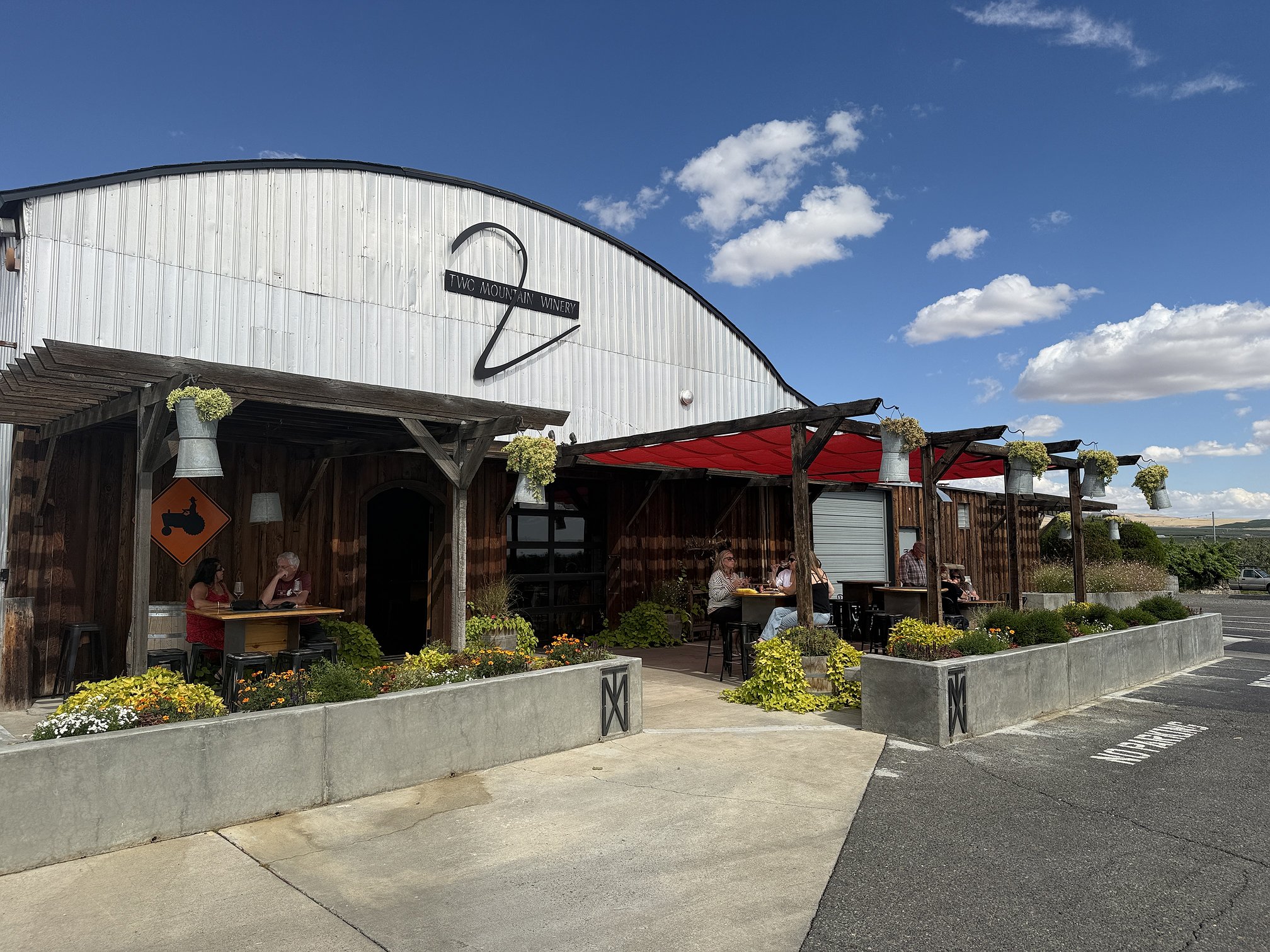 Two Mountain Winery’s tasting room offers an outside seating area as enjoyed by some visitors on a sunny Labor Day.
Ken Smith/Basin Business Journal
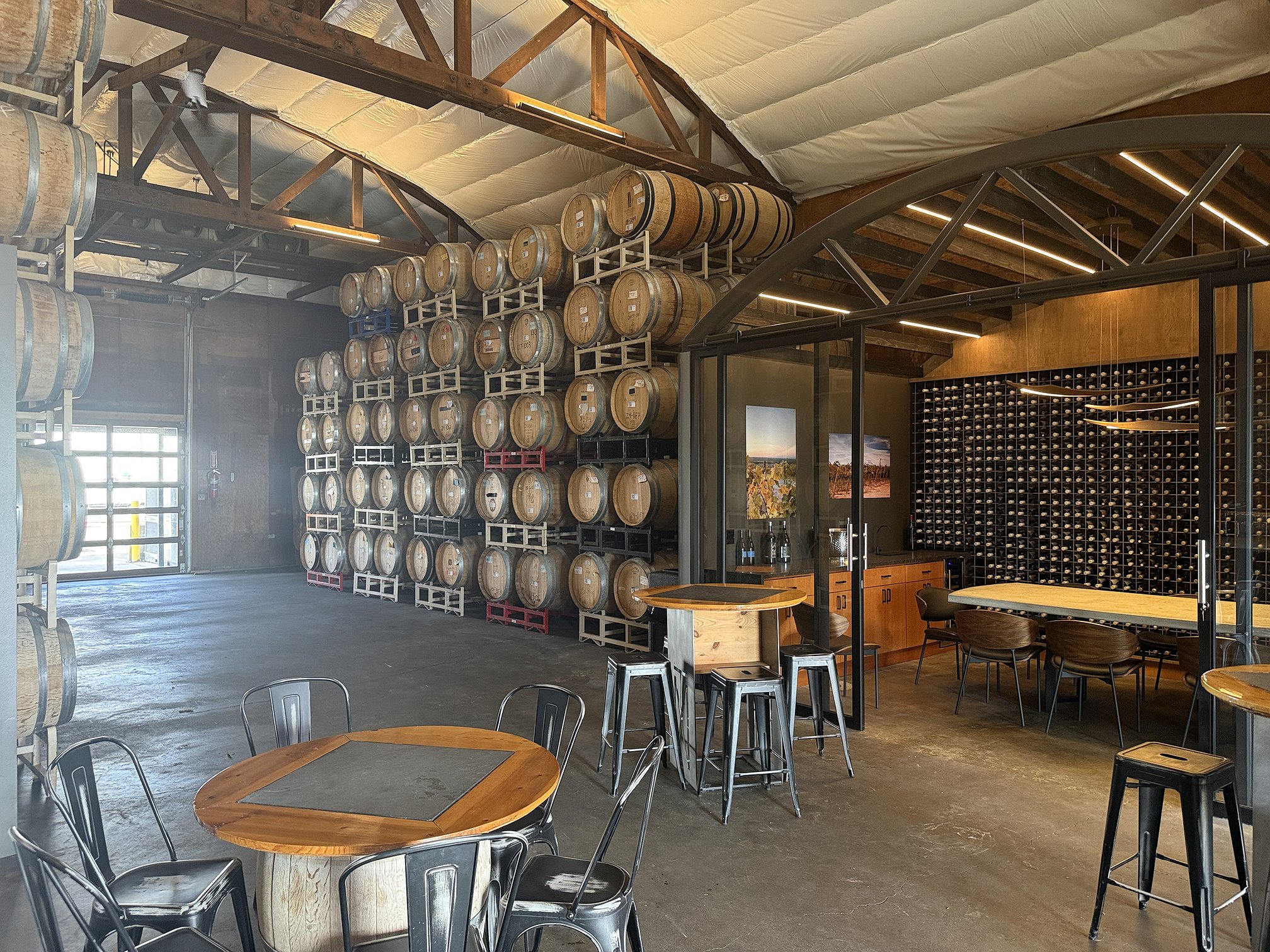 Barrels of wine line walls of Two Mountain Winery.
Ken Smith/Basin Business Journal
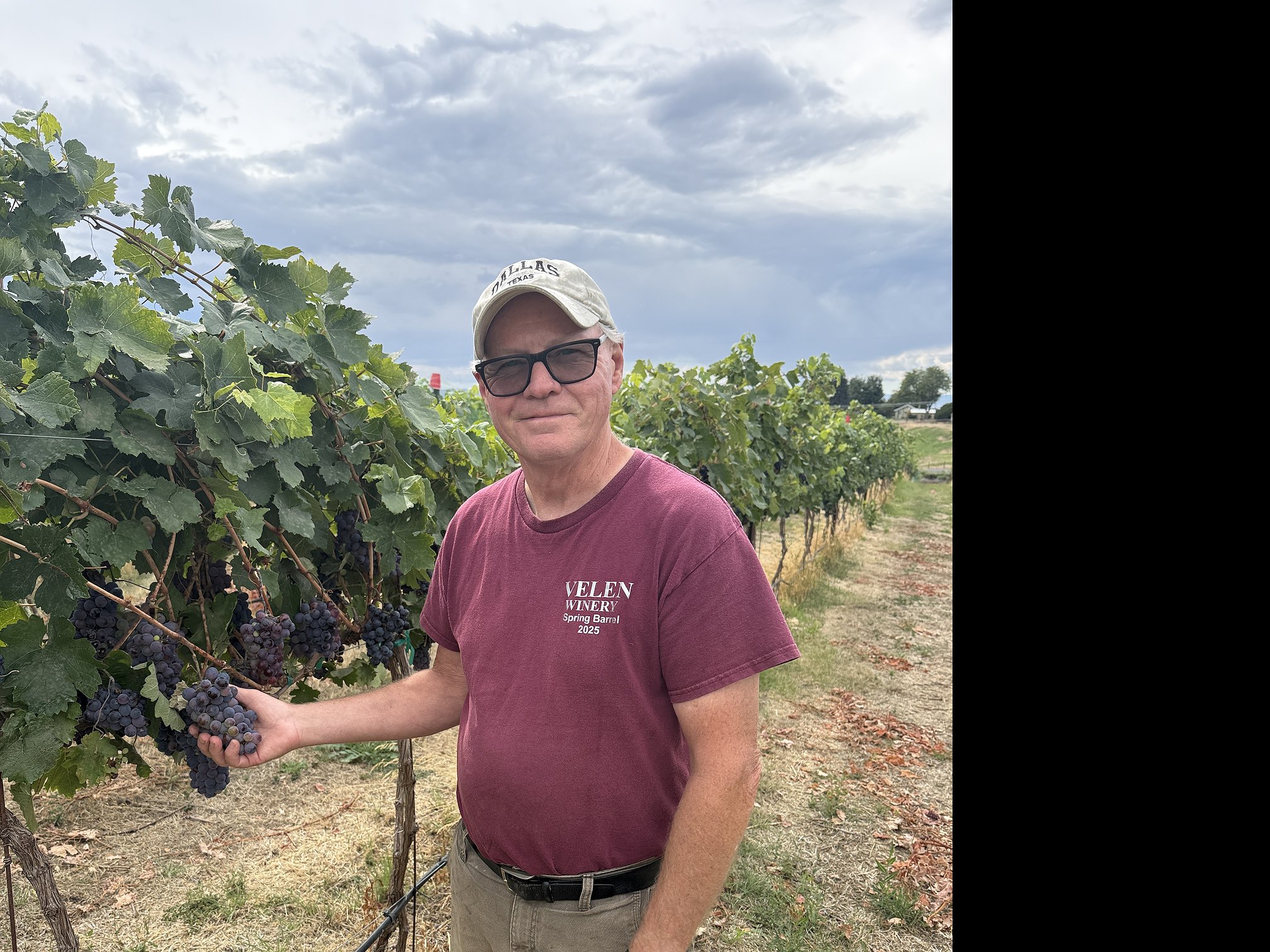 John Otis, owner of Velen Winery, holds some grapes growing on his 4-acre estate.
Ken Smith/Basin Business Journal
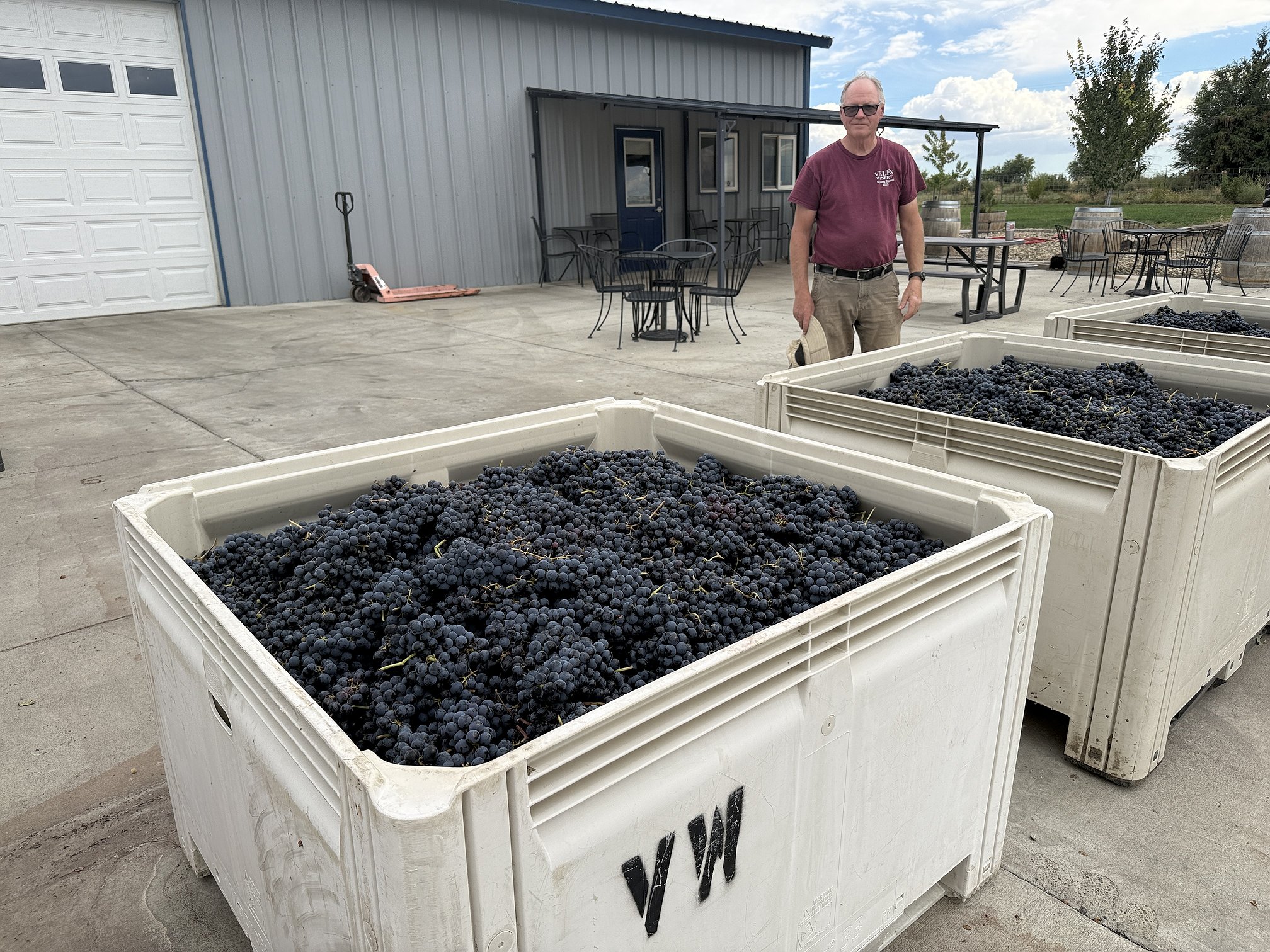 Fresh-picked cabernet grapes sit waiting to be turned to wine.
Ken Smith/Basin Business Journal